

Latin America is showing what Crypto adoption looks like without a Bull Market
There is a common assumption in crypto that adoption moves with the market. When prices go up, more people arrive. When prices fall, interest fades.
Signed analysis and argument from Digital Coin Journal contributors. Opinion pieces reflect the author’s view, not the newsroom’s, and are not investment advice.
60 stories
There is a common assumption in crypto that adoption moves with the market. When prices go up, more people arrive. When prices fall, interest fades.

Solana is expanding its institutional blockchain strategy beyond transaction speed, introducing settlement infrastructure designed to support tokenized securities…

Bitcoin (BTC) now carries less leverage than it did a year ago. Meanwhile, traders are building more positions in altcoins, where buyers can be harder to find during a…

There used to be a simple blueprint for crypto. Want Bitcoin? You signed up for an exchange, bought the coins, and kept them in a wallet.

DeFi was built around a surprisingly human assumption. Someone connects a wallet, evaluates a lending market, approves a transaction, moves liquidity and returns later…

Bitcoin’s market structure is no longer the one that produced its earliest boom-and-bust cycles.

For many years, quantum computing was treated as a future threat to blockchains.

On-chain finance often measures decentralization through custody, governance, and permissionless execution.

The premium that funded two years of accumulation has vanished across much of the sector. Strategy built the most complete version of the model reserves, a real…

Memecoins have usually been defined by their lack of cash flows, formal ownership rights and practical use. U.S.
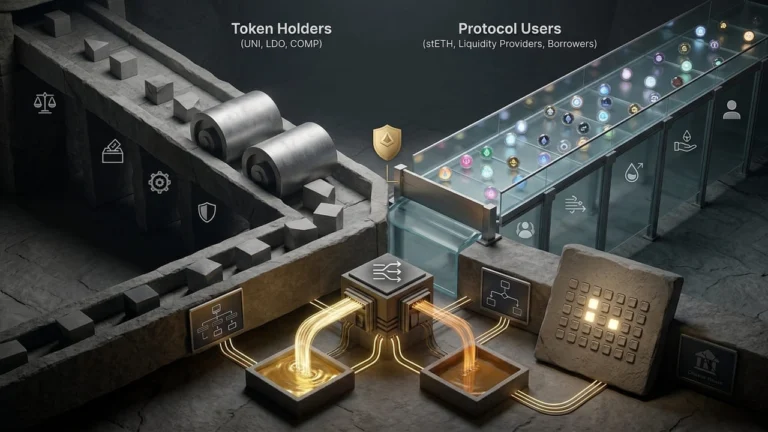
Highlights: Lido gives stETH holders veto rights when governance changes threaten stakers.

Stablecoins are no longer used primarily for crypto trading. Their role is expanding into the transfer and movement of funds between markets.

Highlights: Crypto hacks caused $2.87B in losses across nearly 150 incidents during 2025. Bybit’s $1.46B breach accounted for 51% of all crypto hack losses in 2025.