Fetch.ai Agentverse Nears 3 Million Agents
Fetch.ai's Agentverse shows 2.97M registered agents and 279M messages, but registration remains distinct from active or economically productive usage.


Fetch.ai’s Agentverse is approaching three million registered agents as the company expands the discovery, communication and commerce infrastructure surrounding its autonomous-agent ecosystem. The live Agentverse marketplace currently shows approximately 2.97 million total agents and 279 million cumulative messages exchanged, slightly below the “3M+” figure Fetch.ai has used in recent promotional communications.
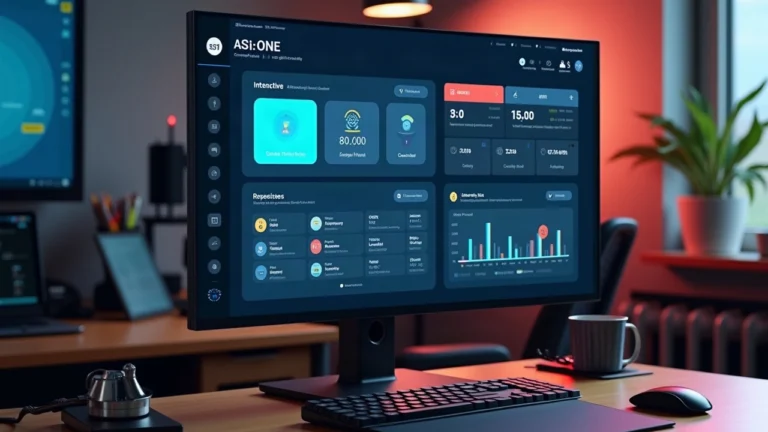
Fetch.ai’s broader Agent Economy overview describes Agentverse as a marketplace and discovery engine through which software agents can find one another, communicate and coordinate tasks through systems such as ASI:One. The scale metric establishes a large registry, but it does not show how many agents are active daily, controlled by unique developers or generating recurring economic activity.
Registration Scale Exceeds Demonstrated Usage
Agentverse supports several deployment models, including hosted, local, mailbox, custom and proxy agents, while its marketplace separately identifies agents as active or inactive. Developers can also register externally hosted systems and expose them for discovery through Agentverse. The platform’s total-agent count therefore should not be interpreted as three million simultaneously running autonomous applications.
An independent Agentverse infrastructure audit conducted during Q1 2026 illustrates why the distinction matters. Researchers Robin Dey and Panyanon Viradecha examined 204 API endpoints and cited more than 36,000 agents registered in the Almanac, Fetch.ai’s on-chain agent registry at the time. Their paper also identified 62 infrastructure gaps across areas including memory, observability, security and economic tooling. That 36,000-plus figure is an older Almanac snapshot and is not directly comparable with today’s 2.97 million Agentverse marketplace total.
Fetch.ai’s current software also makes discovery more nuanced than registration alone. Its Agent Chat Protocol allows ASI:One to route requests to compatible agents, while marketplace filters distinguish active, verified and network-specific deployments. An agent can exist in the registry without necessarily receiving meaningful user traffic, completing transactions or participating repeatedly in multi-agent workflows.
Fetch Expands Tools Around the Agent Registry
The ecosystem is increasingly focused on converting that registry into usable services. Fetch.ai’s developer checklist for interoperable agents standardizes development around uAgents, Agentverse, communication protocols and optional payment functionality. The uAgents framework provides identity, messaging and agent-to-agent communication, while Agentverse handles registration and discovery. That tooling addresses interoperability, but deployment infrastructure alone does not demonstrate recurring demand for the agents built with it.
Fetch Business extends the model toward commercial workflows by allowing companies to create machine-discoverable representatives connected to operational services. As explored in Fetch Business’s digital storefront architecture, agents can expose products, availability, bookings and payment flows to other AI systems. The commercial significance will depend on completed bookings, purchases and repeat interactions rather than the number of business agents registered.
The platform is also adding direct integrations with external tools. Agentverse’s November changelog includes connections for services such as Google Calendar and Slack, alongside CLI and automated-testing improvements. These capabilities expand what a discovered agent can execute after receiving a request. They broaden the operational surface of the ecosystem without establishing that most of the millions of registered agents currently use those integrations.
Agentverse’s 2.97 million registrations and 279 million cumulative messages therefore provide evidence of substantial platform scale, but they remain aggregate infrastructure metrics. The stronger adoption signals will be active-agent counts, recurring interactions, completed workflows and measurable payment volume showing how much of the registry is actually functioning as an autonomous economy.
Tyler Anderson
Hi there! I'm Tyler Anderson from Sweden, and I'm a Web3 Reporter. My main focus is exploring the evolution of Web3, from DAO governance to the real utility of decentralized protocols.
More from Tyler Anderson →This article is for information only and is not investment advice. We report under our Editorial Policy; to flag an error, see our Corrections Policy.