
Bitcoin’s Bear Market May Be Different This Time but That Does Not Mean It Is Over
Bitcoin is in what traders refer to as a bear market, a prolonged period of price declines, and a reassuring narrative is circulating: the severe crashes of the past cannot happen again.

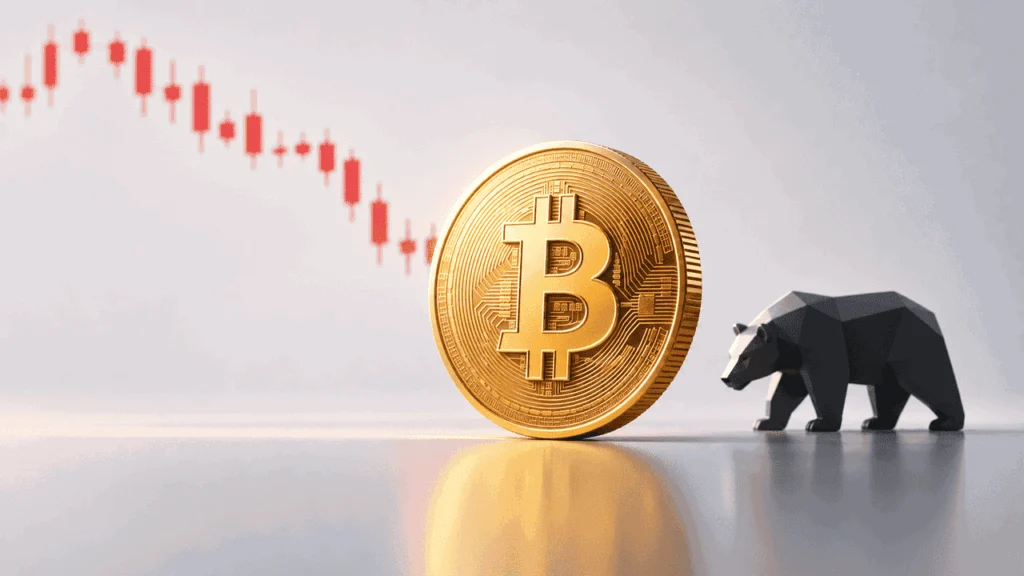
Bitcoin is in what traders refer to as a bear market, a prolonged period of price declines, and a reassuring narrative is circulating: the severe crashes of the past cannot happen again. Large funds and companies now hold substantial amounts of Bitcoin, the thinking goes, so the wild crashes of previous cycles are over. Institutional participation has changed the market, but that does not mean prices cannot fall further.
What Has Really Changed
First, the drawdown has been smaller. The approximately 53% decline from a record high above $126,000 to the cycle’s low is significantly smaller than the declines during the three previous cycles, which were 86%, 84% and 77%, respectively, according to a Bitwise note. Bitcoin reached a low of around $59,000 on 30 June 2026.
Second, the buyers are different. Since 2024, US investors have had access to spot Bitcoin ETFs, which trade like stocks but hold actual Bitcoin as their underlying asset. The estimated average acquisition price for ETF investors was $81,700 to $82,000 per coin. However, institutional participation has not prevented substantial withdrawals. Earlier in November, these funds had recorded $1.43 billion in net inflows for 2026. More recent figures showed cumulative net outflows of more than $1.1 billion, putting the funds on course for their first calendar year of net outflows since their launch. These figures do not establish whether the investors who bought at higher prices are the same ones now selling.
Third, several firms purchased Bitcoin using capital raised from shareholders. Issuing new shares to buy more Bitcoin was particularly attractive for the largest corporate holder, Strategy, when its market valuation traded at around three times the value of its Bitcoin holdings. This valuation multiple has fallen to approximately 1.08. Index provider MSCI is also set to remove Strategy from its affected indices after 30 November. The exclusion does not require the company to sell BTC, but it could make raising capital for further purchases more difficult.
Fourth, Bitcoin remains sensitive to the wider economy. It fell below $74,000 on 10 November after US inflation exceeded forecasts, raising expectations of a further US interest rate increase in December. Higher interest rates generally make riskier investments less attractive. Meanwhile, the supply of stablecoins, digital tokens commonly pegged to the dollar that traders use as a form of cash, fell by $14.2 billion in 30 days, the fastest decline since June 2022, according to Glassnode.
Why That Doesn’t Mean The Worst Is Over
Large investors do not necessarily buy simply because prices have fallen. Their decisions can depend on market trends, investment mandates, risk limits and client demand. When those conditions change, institutional capital can leave the market just as it entered. Bitfinex, a digital currency exchange, highlighted this vulnerability with a reported $2.22 billion in net outflows from US spot ETFs in just eight trading days beginning on 30 October, the largest withdrawal total over a comparable period since July.
Many recent Bitcoin buyers are also sitting on unrealised losses. Bitfinex estimates that 1.6 million Bitcoins acquired between $75,000 and $80,000 are now worth less than their acquisition price, or are “underwater.” Some of those buyers may choose to sell if prices return to their acquisition levels, potentially making a recovery more difficult to sustain.
History offers limited reassurance either. Bitfinex examined 14 occasions since 2016 when Bitcoin fell below the average acquisition price of recent buyers after spending at least 60 days above it. During the following 90 days, the recorded lows were 17–35% below that reference level. Applying those historical percentages to the recent reference level of approximately $75,700 produces an illustrative range of around $49,000 to $63,000. This is not a price forecast, and 14 cases represent a small historical sample. However, the comparison illustrates why June’s low cannot be assumed to represent a definitive market floor.
The idea that downturns keep getting shallower also rests on only three previous cycles. The declines were approximately 85–86%, 84% and 77%, with Galaxy Research putting the first figure at 85%. That is an interesting pattern, but three cases are no guarantee of a floor.
The Optimists Have A Point
The June low occurred 26 months after the April 2024 halving, a scheduled reduction in the rate at which new Bitcoin is issued. That timing falls within the historical window in which past cycles bottomed, while long-term holders were largely retaining their positions. If June proves to have been the bottom, the smaller drawdown would be consistent with the historical pattern of progressively shallower declines.
What I’d Watch For
Money flows, not headlines. Bitfinex found that, following earlier selling streaks this year, a typical 6.4% gain over the next ten trading days was observed when the streak ended with at least three consecutive days of inflows. Signs of improving market conditions would include sustained ETF inflows, Bitcoin recovering above the recent buyers’ average acquisition price of $75,700, and a stabilisation in stablecoin supply.
Large investors have changed the channels through which Bitcoin is bought and sold, as well as the dynamics of capital flows. Their presence, however, has not prevented the current downturn. Until sustained buying demand returns, the fact that this cycle has experienced a smaller drawdown so far does not establish that future declines will also be less severe.
Saad Ahmad Lone
My name is Saad Ahmad Lone, and I’m a crypto content writer specializing in SEO, AEO, and creative writing. I focus on Bitcoin, Ethereum, market trends, price predictions, and the latest developments in the cryptocurrency industry, with a particular interest in market dynamics during bearish periods.
More from Saad Ahmad Lone →This article is for information only and is not investment advice. We report under our Editorial Policy; to flag an error, see our Corrections Policy.