Are Smart Institutions Quietly Accumulating the Crypto Bottom?
Institutions including ARK Invest, and Strategy show selective crypto accumulation amid Bitcoin ETF outflows, but has the market found a bottom?


Bitcoin is experiencing another wave of selling, ETFs are recording capital outflows, and fear is dominating investor decisions. However, some institutions continue to increase their holdings in cryptocurrency-related assets.
Wells Fargo, ARK Invest, and Strategy are behaving differently from much of the market. Their transactions do not necessarily serve the same objectives, but they raise an important question: are they taking advantage of lower prices, or simply buying before the decline is over?
Answering that question requires distinguishing between recent purchases, positions reported months earlier, and corporate accumulation strategies.
The activity of these financial institutions deserves attention, but it is still too early to conclude that Bitcoin has found its bottom. A company can have more capital, better tools, and longer investment horizons without correctly timing its entry.

ETF Outflows Show That Fear Persists Among Institutions
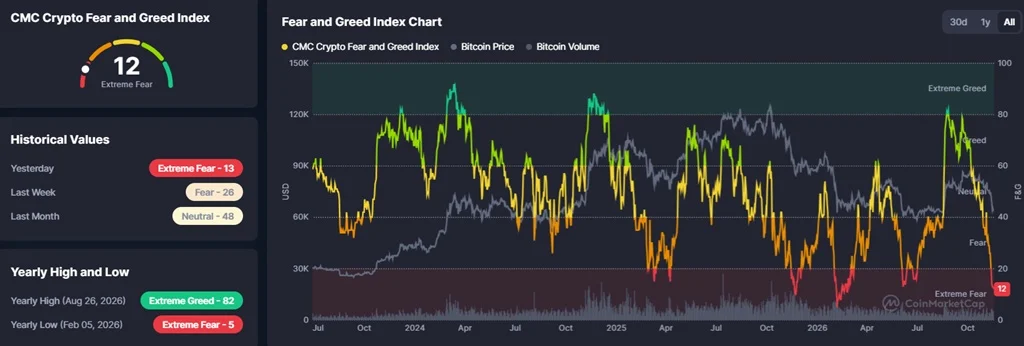
Bitcoin fell to nearly $62,000 over the weekend and subsequently traded around $64,000, without achieving a consistent recovery.
The CoinMarketCap Fear and Greed Index stands at 12 points, within the extreme fear category.
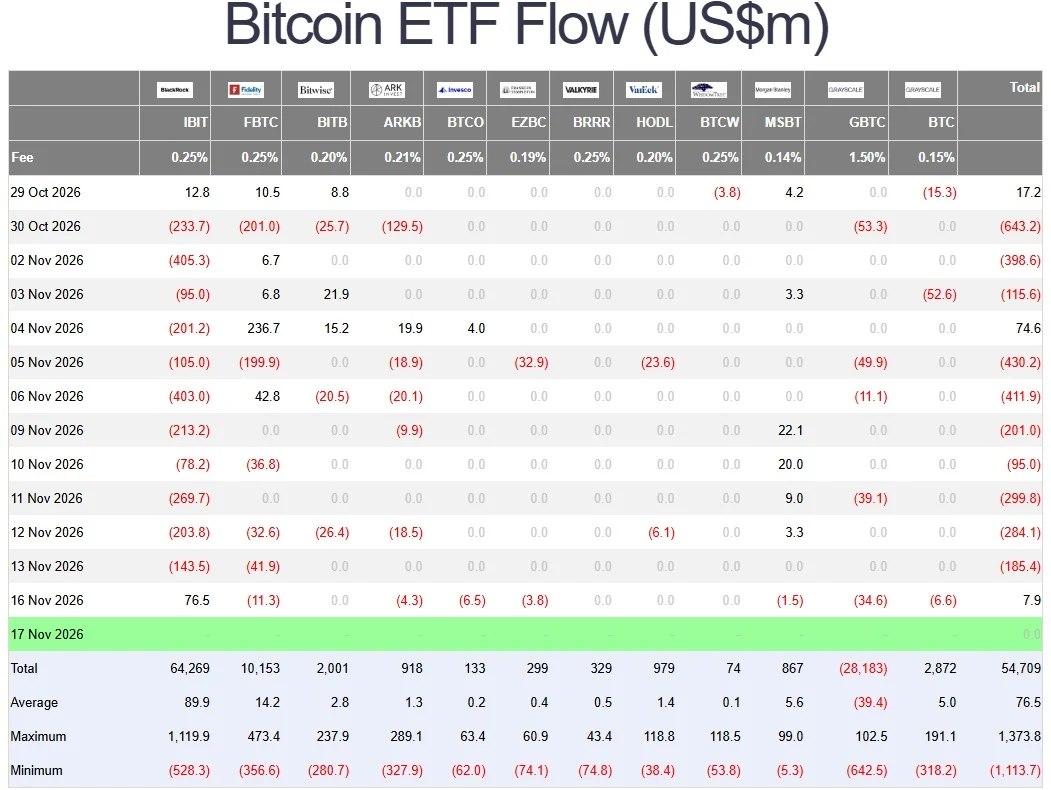
U.S. spot Bitcoin ETFs also recorded seven consecutive sessions of net outflows, before posting $7.9 million in net inflows on November 16, according to data from Farside Investors.
That inflow interrupted the negative streak, but its size was small compared with the previous waves of outflows.
ETF activity matters because these investment vehicles provide access to Bitcoin through traditional financial intermediaries. When outflows persist, selling pressure on the market can increase.
However, net ETF outflows do not mean that all institutions are selling. These funds bring together transactions from different participants, and their daily flows alone cannot identify the decisions of individual buyers.
Wells Fargo and ARK Invest Take a Different Approach
Wells Fargo provides a contrast to the recent selling.
In its filing covering the end of September, the bank reported 49.58 million shares of BlackRock’s iShares Bitcoin Trust (IBIT), valued at approximately $2.35 billion.
Its share count had increased by 103% compared with the previous quarter. Wells Fargo also increased its holdings in the ETHA Ethereum ETF by 125%, reaching 22 million shares.
These are substantial increases, but there is an important limitation: the 13F filing describes positions held as of September 30. It does not prove that Wells Fargo bought during November’s declines or reveal its net economic exposure.
These positions may reflect client investments, hedging transactions, or intermediary activities.
ARK Invest, meanwhile, has made recent purchases as cryptocurrency-related stocks declined.
Cathie Wood’s investment firm acquired 277,523 shares of Block, worth approximately $23 million, along with 180,534 shares of Circle for $10.4 million and 53,760 shares of Coinbase for $6.4 million.
At the same time, it sold approximately $84.8 million worth of Nvidia shares.
These transactions suggest a reallocation of capital toward certain crypto-related companies, but they are not equivalent to buying Bitcoin directly.
ARK also periodically adjusts its funds’ holdings. A purchase may reflect either an attractive valuation or the need to rebalance a portfolio.
Strategy Continues Buying
Strategy represents a different case because its treasury policy is directly tied to Bitcoin.
The company acquired another 485 BTC for approximately $33.4 million, at an average price of nearly $68,887 per coin.
Following that purchase, its holdings reached approximately 850,849 BTC.
The acquisition took place despite the market downturn and while Bitcoin was trading below the average price paid in that transaction.
Strategy does not need to predict the bottom of every market cycle to continue buying. Its policy is to maintain a long-term position, financed through various corporate instruments.
But that decision also involves certain risks. Accumulating Bitcoin during a downturn can improve the average purchase price of future acquisitions, although it increases the company’s exposure if the decline continues.
Strategy’s commitment demonstrates that long-term institutional demand exists. It does not prove that other companies are willing to assume the same level of risk.

Buying During Fear Is No Guarantee
The differences between these institutions’ activities are fundamental.
Wells Fargo reported historical ETF holdings. ARK purchased shares of companies connected to the industry. Strategy acquired Bitcoin for its corporate treasury.
These three decisions represent different forms of exposure and cannot be combined as though they were a single wave of institutional buying.
It would also be incorrect to interpret ETF outflows as a permanent withdrawal by institutions. These products attract investors with different investment horizons, liquidity needs, and strategies.
The more useful question is whether selective purchases from institutions can absorb selling pressure and support a recovery.
Answering it will require monitoring whether net inflows return to ETFs, whether direct demand for Bitcoin increases, and whether companies maintain their purchases while prices remain under pressure.
Financial conditions also matter. Interest rates, bond yields, and declines in technology stocks can reduce the capital available for risk assets, even among large investors.
Institutions buying now could achieve strong returns if the market recovers, but their size does not protect them from further losses.
The most interesting aspect of this period is that major investors are not all moving in the same direction. Some are reducing exposure, others are adjusting their portfolios, and a few continue accumulating.
This divergence could precede a recovery, but it could also persist through months of declining prices. Before declaring an institutional bottom, Bitcoin needs to demonstrate that demand is strong enough to absorb the selling pressure still entering the market.
Derek Vaughn
Hi! I'm Derek Vaughn, a Market Research Specialist based in Nigeria. I analyze crypto markets from a global perspective, trying to understand what's behind price movements and liquidity trends. I've been covering the digital ecosystem for several years, and my style is based on rigorous, data-driven research.
More from Derek Vaughn →This article is for information only and is not investment advice. We report under our Editorial Policy; to flag an error, see our Corrections Policy.