OpenSea Adds Minimum Price Increments for NFT Listings
OpenSea introduces minimum NFT listing increments to curb automated micro-undercutting while leaving permissionless Seaport settlement unchanged.

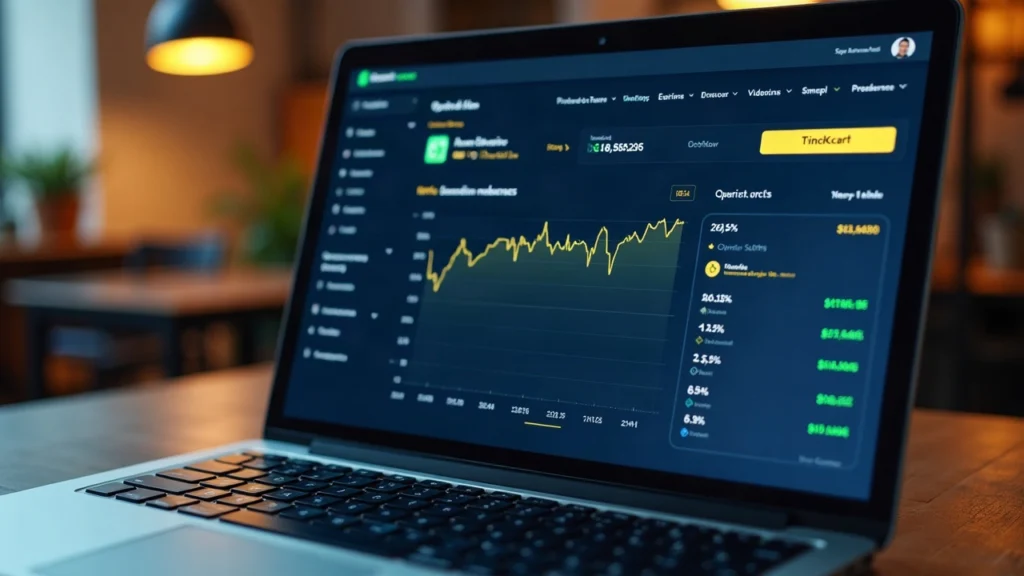
OpenSea has begun enforcing minimum price increments for NFT listings, targeting automated repricing that repeatedly moves collection floors by economically negligible amounts. According to the official OpenSea changelog published November 24, the marketplace is limiting listing prices to three significant digits per item, with an additional four-decimal cap at prices of 0.001 or higher.
Protocol engineer Ryan said automated accounts have been undercutting active floors by amounts as small as 0.0000001 ETH, causing listings to reshuffle even when the displayed price barely changes. OpenSea is beginning the rollout with its highest-churn API accounts before expanding it more broadly. The measure changes how precisely sellers and bots can price orders submitted to OpenSea rather than imposing a universal minimum NFT price.
Price Rules Scale With Each Listing
The permitted increment depends on the listing’s per-unit price. A 1.24-unit listing, for example, can move to 1.25, while prices between 0.001 and 0.1 use minimum steps of 0.0001. Items below 0.001 remain supported and can use additional decimal places as long as the price stays within the three-significant-digit rule. This scaling preserves pricing flexibility for inexpensive NFTs while eliminating increasingly tiny increments as prices rise.
The restriction is also currency-neutral. OpenSea says the calculation applies per unit in the listing’s payment currency, including ETH, other native assets and ERC-20 tokens such as USDC and WETH. Listings that exceed the permitted precision are rejected by the API with a 400 validation response that provides the nearest acceptable price. Existing minimum-increment rules for offers remain unchanged, extending an approach OpenSea was already using on the bidding side of its marketplace.
The change addresses an increasingly automated trading environment in which marketplace interfaces can receive large volumes of listing updates without corresponding changes in economic value. Floor prices are especially sensitive to this behavior because the lowest active listing can change immediately when a bot reprices by a tiny amount. Recent NFT markets have already shown how rapidly visible floors can move when supply changes, including during concentrated buying in the Stornks collection. OpenSea’s new rule targets orderbook presentation and repricing behavior rather than attempting to prevent automation itself.
Seaport Remains Permissionless
The enforcement boundary stops at OpenSea’s marketplace infrastructure. Ryan clarified that Seaport remains permissionless onchain, allowing users to create and settle orders at prices of their choosing directly through the protocol. OpenSea’s own documentation describes Seaport as the settlement protocol underlying its EVM marketplace transactions. The new tick-size policy therefore governs which orders OpenSea accepts and presents, not what prices the underlying smart contracts can technically execute.
That distinction is increasingly relevant as OpenSea broadens its role beyond a single-chain NFT venue. Its expansion onto Robinhood Chain produced 50,000 NFT mints and 80,000 secondary sales during the network’s early marketplace activity, while later data showed Robinhood Chain NFT activity settling below its initial $3.13 million daily peak. A larger multichain order flow makes marketplace-level controls over automated submissions operationally more significant even when settlement remains decentralized.
OpenSea has not announced a date for applying the listing rule to every account. For now, the rollout concentrates on API users generating the greatest listing churn, giving the marketplace a staged way to assess its effect before broader deployment. The immediate change is narrower than a protocol upgrade, but it materially alters how automated sellers can compete for visible floor position inside OpenSea’s orderbook.
Mia Thompson
I am Mia Thompson, a Blockchain Reporter specializing in Altcoins, and I am from Mexico. My day-to-day work consists of exploring the ecosystem beyond Bitcoin.
More from Mia Thompson →This article is for information only and is not investment advice. We report under our Editorial Policy; to flag an error, see our Corrections Policy.