Extreme Fear Creates the Best Buying Windows—History Demands Courage
Extreme fear grips the crypto market, but disciplined investors may find buying opportunities amid Bitcoin volatility and liquidations.


The crypto market is experiencing one of its periods of deepest pessimism. Bitcoin suffered a sharp correction, liquidations of leveraged positions increased selling pressure, and many investors began questioning the possibility of a recovery. However, periods of extreme fear can also create opportunities for those who maintain a long-term investment strategy.
Buying during a steep market decline means accepting that prices may continue to fall. But waiting until all uncertainty disappears does not guarantee better results either. By the time market confidence returns, a substantial portion of the rebound may have already occurred. The discipline to invest during periods of pessimism can be more valuable than trying to identify the exact bottom of a market correction.
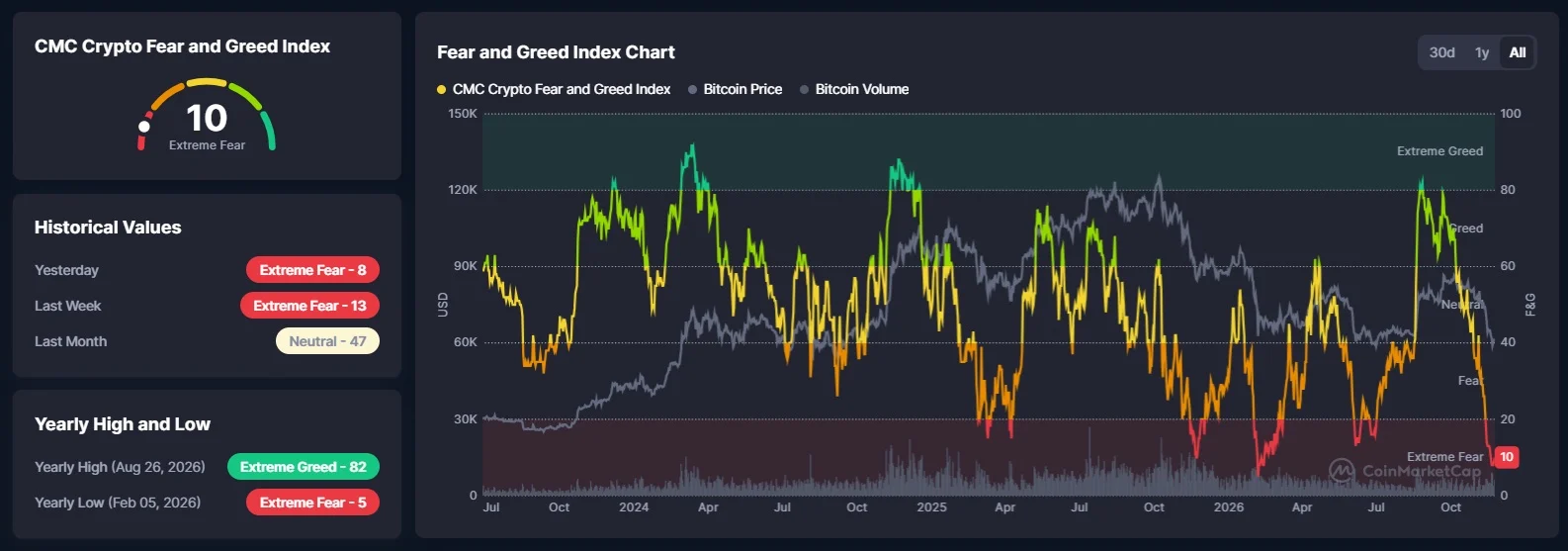
Extreme fear dominates the crypto market
The Fear and Greed Index from CoinMarketCap stands at 10 out of 100, placing it in the extreme fear category. The indicator fell sharply during November after remaining above 50 in late October.
The deterioration in market sentiment coincides with a major Bitcoin correction, with the cryptocurrency trading near $55,100 over the weekend before recovering toward $64,000.
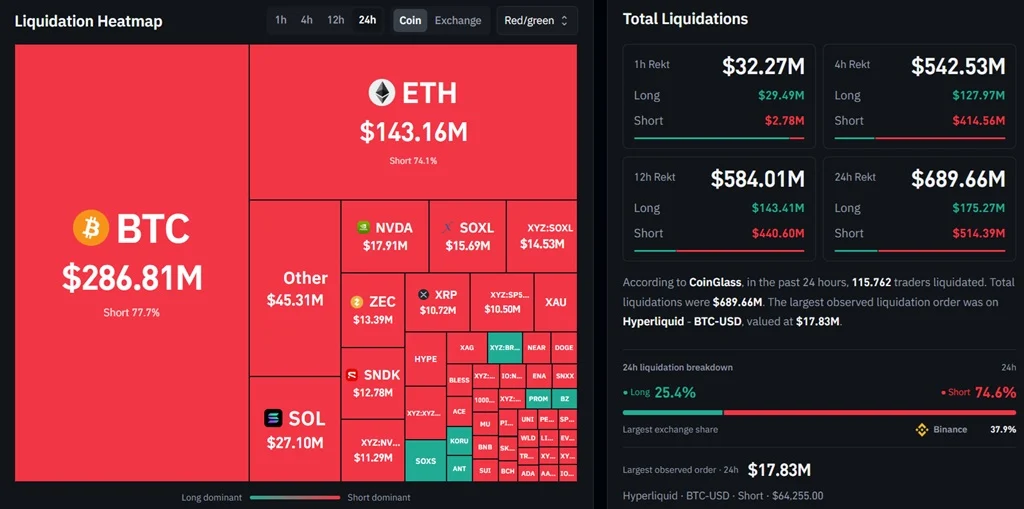
The decline was also accompanied by liquidations of leveraged positions. When prices reach certain levels, traders who borrow funds to increase their exposure may be forced to close their positions. These automatic sales intensify pressure on an already struggling market.
Liquidation data from CoinGlass helps track this activity, although aggregate figures do not necessarily distinguish between forced liquidations and voluntary selling decisions.
Liquidations can accelerate a market decline without necessarily changing the fundamental outlook for the affected assets. That distinction matters for investors evaluating opportunities over several years.
History favors patience
Periods of extreme fear have coincided with major buying opportunities on several occasions. During the 2018 and 2022 crises, Bitcoin experienced prolonged periods of deep pessimism before eventually recovering.
However, these episodes also show that fear can persist for months and prices can continue falling even after market sentiment reaches extremely negative levels.
Sentiment indicators cannot reliably identify exact market bottoms. Nor is there an automatic relationship between an extremely low reading and an immediate recovery.
Opportunities emerge when investors can distinguish between declines caused by fundamental problems and those intensified by liquidations, liquidity needs, or emotional decisions.
Bitcoin offers a useful case study. After recording 18 consecutive trading days of lower daily highs, the cryptocurrency managed to break above the previous session’s high on Sunday. Ending that streak suggests selling pressure may be easing, although it remains insufficient to confirm a trend reversal.

Buying with discipline when the market is afraid
Capital outflows from Bitcoin ETFs and upcoming Federal Reserve decisions remain sources of uncertainty. PCE inflation data could also change interest rate expectations and trigger further episodes of volatility.
Ignoring these risks would be just as reckless as selling solely out of fear. An alternative is to establish a gradual accumulation strategy, spreading purchases across different periods and avoiding excessive leverage.
This approach helps reduce dependence on a single trade while preserving liquidity if prices continue falling. It also requires selecting assets with sufficient liquidity, verifiable utility, and long-term survival prospects.
Not every cryptocurrency that suffers a major decline eventually recovers its value. Some projects disappear, while others never return to their previous all-time highs. Buying a token simply because its price has fallen substantially can therefore be particularly dangerous.
Extreme fear can offer better entry conditions, but it does not automatically turn a risky investment into a good opportunity.
The real advantage of a disciplined strategy lies in the ability to act without being controlled by the emotions dominating the market. While liquidations and redemptions put pressure on prices, long-term investors can evaluate opportunities without borrowing money or committing capital they need in the short term.
Derek Vaughn
Hi! I'm Derek Vaughn, a Market Research Specialist based in Nigeria. I analyze crypto markets from a global perspective, trying to understand what's behind price movements and liquidity trends. I've been covering the digital ecosystem for several years, and my style is based on rigorous, data-driven research.
More from Derek Vaughn →This article is for information only and is not investment advice. We report under our Editorial Policy; to flag an error, see our Corrections Policy.