Russia’s Retail Crypto Opening Could Ignite a New Black-Market Boom
Russia opens limited retail crypto trading, raising questions about black markets, sanctions evasion, capital flight, and regulation.

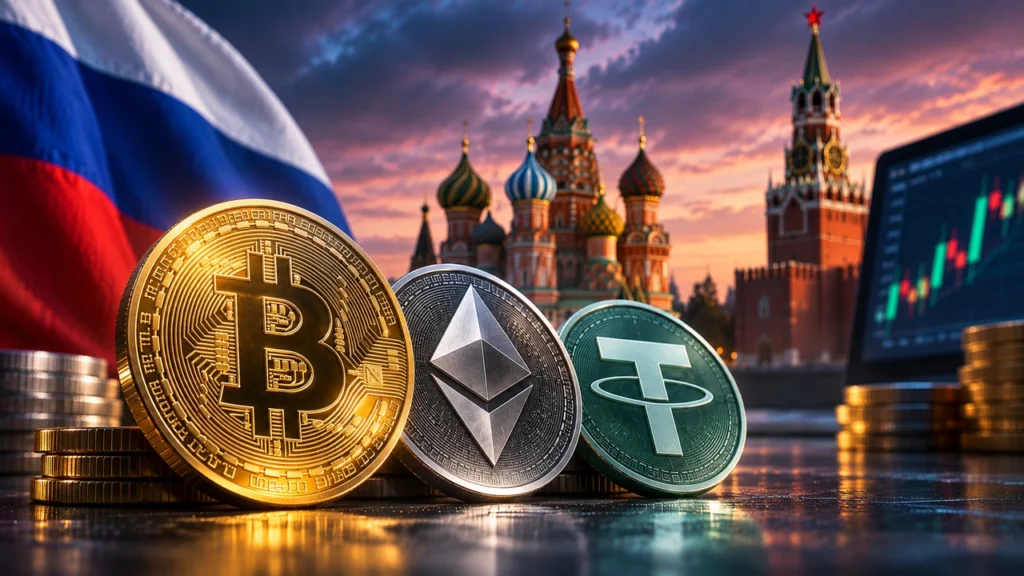
Russia will allow retail investors to purchase Bitcoin, Ethereum, and Tether (USDT) through regulated intermediaries starting November 17. The Bank of Russia has set an annual limit of 300,000 rubles per intermediary, approximately $3,700, for investors who do not qualify as accredited investors.
With this decision, Russia appears to be offering a legal alternative for those seeking to invest in cryptocurrencies. However, it also creates a contradiction: when regulated access comes with strict limits, some demand may shift toward informal platforms that operate with fewer safeguards and carry greater risks.
The problem takes on another dimension in an economy like Russia’s, which is subject to international sanctions. Cryptocurrencies can help diversify savings and facilitate transfers, but they also raise concerns about sanctions evasion and capital flight.
The question is whether the new system will attract transactions into supervised channels or end up creating two parallel markets: one regulated and another willing to serve those seeking to bypass its restrictions.
Russia Creates a Highly Restricted Market
According to the Bank of Russia, retail investors will be able to purchase the three authorized cryptocurrencies through brokers, asset managers, and exchanges, both on regulated exchanges and over-the-counter markets.
All investors will be required to pass a knowledge assessment and receive information about the risks. Qualified investors, meanwhile, will be able to access other crypto assets without purchase limits.
This distinction is intended to reduce smaller investors’ exposure to volatile assets. But an annual limit applied to each intermediary is not the same as an overall limit per person.
Those with sufficient resources could spread their purchases across different providers. Others could turn to foreign platforms or peer-to-peer exchanges.
That does not mean the regulation will automatically cause the black market to expand. A legal channel could attract users who previously distrusted informal operators.
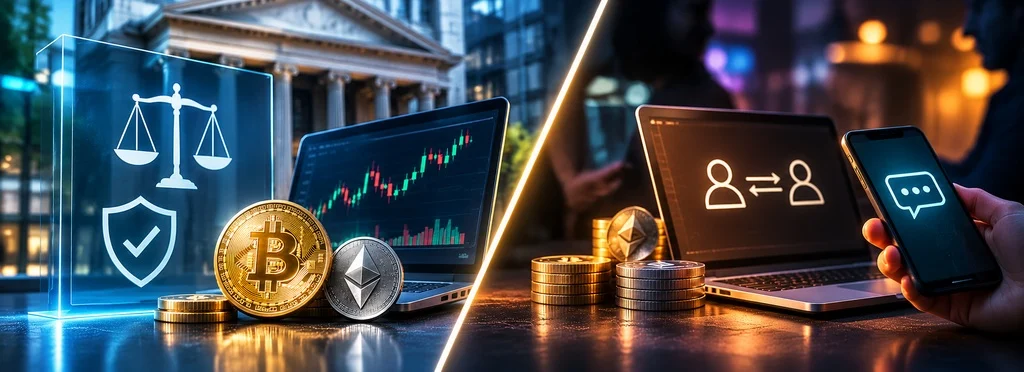
The main problem arises when restrictions are easier to circumvent than to comply with. If regulated intermediaries impose costly controls while underground operators offer greater flexibility, the opening could leave a substantial share of the activity it aims to supervise outside the regulated market.
Sanctions and Capital Flight Complicate the Crypto Opening
The inclusion of USDT deserves particular attention. Unlike Bitcoin and Ethereum, this stablecoin aims to maintain its value relative to the US dollar.
That feature may appeal to people seeking to protect their savings from exchange-rate fluctuations without holding an asset as volatile as BTC or ETH.
It also facilitates international transfers through blockchain networks, although its use does not guarantee anonymity or immunity from regulatory controls.
The financial sanctions affecting Russia present another problem for intermediaries and their counterparties. Authorizing cryptocurrency purchases within the country does not eliminate international restrictions that may apply to certain individuals, entities, or transactions.
Furthermore, a legal purchase does not necessarily determine what happens to the assets afterward. They can be held, sold, or transferred to other addresses.
Russia needs to address that distinction without treating every international transfer as an illicit transaction.
A system that allows people to acquire cryptocurrencies but makes their legitimate use excessively difficult could end up encouraging services outside the regulated market.
Regulation Needs to Compete With the Informal Market
The Bank of Russia has also established that exchanges may begin trading cryptocurrencies on November 22, provided their operating rules receive prior regulatory approval.
The opening creates an opportunity to record transactions, require intermediaries to implement controls, and provide users with channels for filing complaints.
But the existence of an authorized market does not guarantee that informal operators will lose customers.
For that to happen, legal channels need reasonable access conditions, competitive fees, and clear rules governing transfers and custody.
Russia will also have to address a tension that affects other countries: allowing citizens to hold digital assets without turning every transaction into a means of evading financial obligations.
Regulation can reduce the risks associated with informal markets, but it can also push activity toward them if it imposes restrictions that are difficult to comply with. The 300,000-ruble limit per intermediary will test that tension, particularly once trading begins and investors can compare the available alternatives.
Tyler Anderson
Hi there! I'm Tyler Anderson from Sweden, and I'm a Web3 Reporter. My main focus is exploring the evolution of Web3, from DAO governance to the real utility of decentralized protocols.
More from Tyler Anderson →This article is for information only and is not investment advice. We report under our Editorial Policy; to flag an error, see our Corrections Policy.