Can Traditional Bond Giants Survive the Solana Tokenization Experiment?
Schroders brings an emerging-market bond fund to Solana, testing whether tokenization can reduce costs and meet institutional demands.

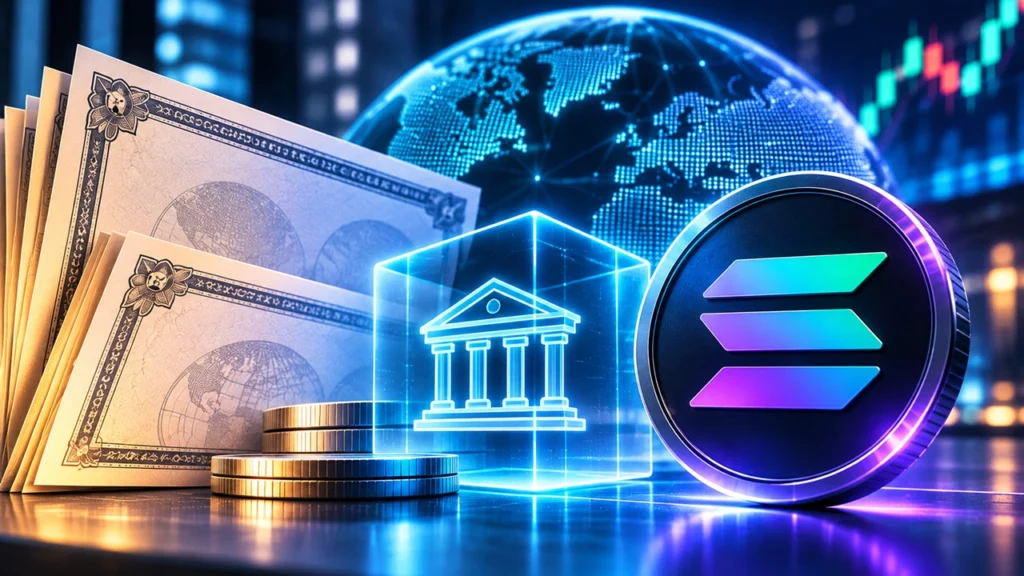
Asset manager Schroders is bringing an emerging-market bond fund to Solana through tokenization infrastructure. The initiative tests whether a blockchain designed to process fast, low-cost transactions can meet the demands of traditional financial products.
The involvement of an international asset manager radically changes the scope of the discussion. Tokenized bonds must operate within structures involving administrators, custodians, distributors, and regulatory obligations.
Solana may offer technological advantages, but institutions need more than speed to move their products onto a blockchain.
The value of this experiment lies in determining whether tokenization improves specific financial processes and attracts capital on a sustained basis.
Solana Must Prove That Tokenization Reduces Real Costs
An actively managed bond fund needs to handle subscriptions, redemptions, ownership records, and communications with investors. It must also maintain controls over who can access the product and under what conditions.
Tokenization allows shares in that fund to be represented as digital assets. However, holding a token does not mean the underlying bonds are traded directly on the blockchain. This distinction is fundamental to assessing the benefits of Schroders’ initiative.
Solana offers low network fees and the capacity to process large numbers of transactions. These characteristics can facilitate the transfer and recording of tokenized fund shares.
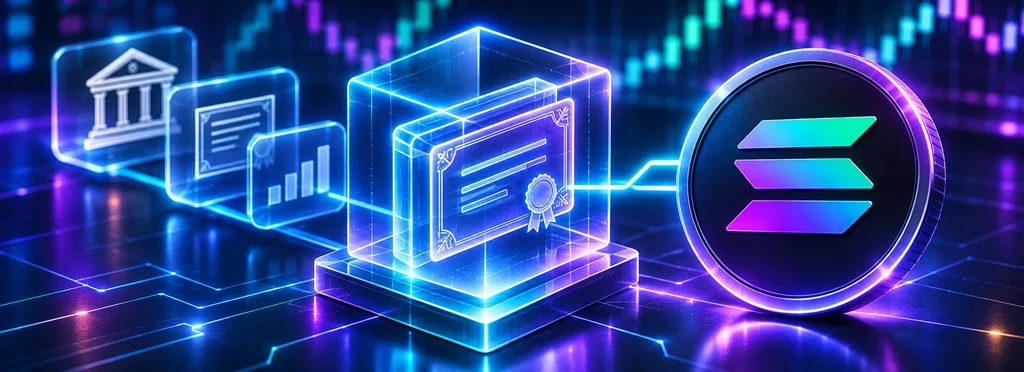
But a fund’s expenses do not depend solely on transactions. They also include administration, custody, regulatory compliance, and investment management.
A cheaper transfer does not guarantee a reduction in the product’s total cost if institutions must maintain the same procedures outside the blockchain.
Real progress will come if the infrastructure can simplify distribution, reduce reconciliation tasks, or improve settlement processes.
Asset availability is also important. A tokenized fund can operate on a network that is available around the clock, but its underlying investments remain subject to market hours, liquidity conditions, and financial procedures.
For that reason, Solana’s 24-hour availability does not automatically turn traditional bonds into instruments with continuous liquidity.
Blockchain infrastructure can accelerate certain operations without eliminating the product’s economic constraints.
Institutional Adoption Requires Trust Beyond Speed
Schroders brings experience in asset management and relationships with institutional investors. Its participation makes it possible to examine tokenization from the perspective of an established financial institution. But launching a product does not prove that lasting demand exists.
Solana’s challenge will be to get institutions to use its infrastructure repeatedly, rather than limiting their involvement to experimental issuances.
To achieve this, tokenized funds need reliable custody mechanisms, operational recovery procedures, investor identification, and regulatory compliance.

Institutions must also assess the risks associated with smart contracts, validator infrastructure, and technology providers connecting the blockchain to traditional financial systems.
A technical disruption can have different consequences when it affects speculative trading than when it compromises an investment fund’s operations.
This does not mean Solana should be dismissed because of its technological risks. It means performance advantages must be evaluated alongside the operational safeguards required by asset managers.
Competition is not limited to other public blockchains. Institutions can use private networks, traditional recordkeeping systems, or infrastructure combining different technologies. Solana needs to offer sufficient benefits to justify integration with existing systems.
Another challenge is distribution. If tokenized fund shares can circulate only among a limited group of authorized investors, the technology may improve certain processes without necessarily creating a broad secondary market.
Tokenization does not create liquidity on its own. Trading requires buyers, sellers, intermediaries, and rules that allow transactions to take place.
Emerging-market funds face additional requirements related to credit risk, currencies, and the availability of underlying instruments. No blockchain eliminates these conditions.
The decisive question is not how many transactions Solana can process, but how many institutional operations it can simplify without imposing additional costs or risks on investors.
Tyler Anderson
Hi there! I'm Tyler Anderson from Sweden, and I'm a Web3 Reporter. My main focus is exploring the evolution of Web3, from DAO governance to the real utility of decentralized protocols.
More from Tyler Anderson →This article is for information only and is not investment advice. We report under our Editorial Policy; to flag an error, see our Corrections Policy.
Related coverage
Has OpenAI’s Linux Breakthrough Made Crypto’s Security Model Obsolete Overnight?

Are AI-Powered Hacks Like Binance’s the New Existential Threat That Will Force Crypto’s Security Reckoning?