Has Solana’s Lightning-Fast Alpenglow Sealed Ethereum’s Performance Defeat?

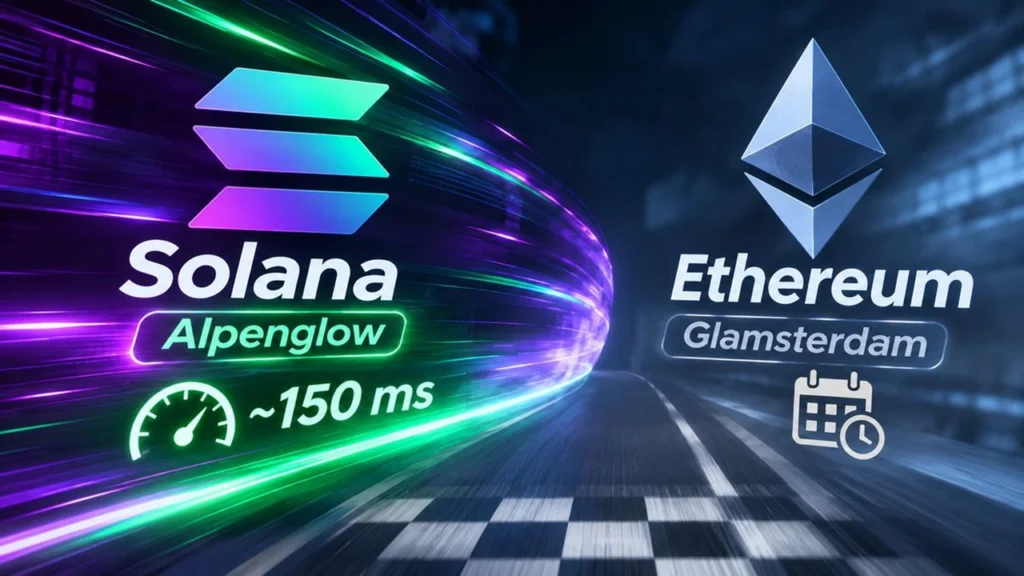
The competition between Solana and Ethereum has reached a turning point. The activation of Alpenglow drastically reduced the time required for transactions to reach finality, while Ethereum is facing further delays to its next upgrade. The performance gap is no longer just about technical capabilities: the two networks are delivering very different results when it comes to executing their plans.
Solana is winning the race for speed, particularly for applications that need to process payments and transactions almost instantly. However, declaring Ethereum defeated would mean confusing a specific technical advantage with dominance over the entire market. Security, liquidity, and institutional infrastructure remain decisive factors.
Alpenglow Puts Solana Ahead on Speed
On October 21, Solana activated Alpenglow, the most substantial change to its consensus system since the network launched. The upgrade replaced TowerBFT with Votor, a mechanism that allows validators to exchange votes directly and reach consensus through certificates.
The new protocol targets transaction finality of approximately 150 milliseconds, compared with the 12.8 seconds required by the previous system. This improvement considerably reduces the time an application must wait before treating a transaction as irreversible.

The difference matters particularly for merchant payments, trading platforms, and financial services that process large volumes of transactions. For these businesses, waiting several seconds can complicate the user experience and the management of available funds.
Speed stops being a secondary feature when a blockchain aims to compete with traditional payment systems. Merchants should not have to choose between accepting cryptocurrency and providing an instant checkout experience.
Alpenglow still has limitations. The 150-millisecond figure is a finality target, not a guarantee that every transaction will reach the user within that time. In addition, the upcoming Rotor upgrade is expected to improve block propagation, an area of the network that still relies on the previous infrastructure.
Ethereum Faces Delays but Retains Important Advantages
Ethereum is in a different position. Its Glamsterdam upgrade aims to increase mainnet processing capacity through changes to block construction, data access, and resource management.
However, the Ethereum Foundation announced that it was postponing Glamsterdam’s activation on the Hoodi testnet, originally scheduled for October 26. Developers need to investigate potential interactions between EIP-8037 and existing smart contracts, and they have yet to set a new date.
The delay is intended to allow additional testing, not because an upgrade failed on mainnet. Even so, it illustrates the difficulties of modifying infrastructure that supports substantial amounts of assets and financial applications.
Ethereum still has advantages that Solana cannot overcome through speed alone. Its ecosystem of financial protocols, layer-2 solutions, and institutional products provides alternatives for transactions that prioritize security and integration with other services.
Layer-2 networks can also reduce costs and increase processing capacity, although they introduce differences in settlement mechanisms, security guarantees, and user experience.

Speed Alone Will Not Determine Which Blockchain Dominates
Solana’s advantage following Alpenglow raises an uncomfortable question for Ethereum: how much performance can a network sacrifice before losing applications that need to operate in real time?
Developers building consumer-facing services have little incentive to accept delays when an alternative offers near-instant finality. Payment platforms, games, and certain financial applications may find Solana’s infrastructure better suited to their needs.
However, institutions managing substantial assets assess a different set of risks. Custodian availability, smart contract security, liquidity, and regulatory compliance procedures may matter more than a difference of a few milliseconds.
Nor would it be reasonable to declare a definitive winner just weeks after an upgrade. Alpenglow must demonstrate that it can sustain its performance under varying levels of network activity and continue improving its infrastructure without compromising network stability.
Alpenglow is a performance victory for Solana, but it does not amount to a definitive defeat for Ethereum. For applications that require speed, Solana is becoming an increasingly attractive choice. Ethereum still has compelling advantages for institutions that prioritize security, liquidity, and established financial services.
The competition between Alpenglow and Glamsterdam now requires a distinction between two needs that do not always align: processing transactions as quickly as possible, as Solana aims to do, and managing assets with the safeguards that Ethereum prioritizes for the financial system.
Colin Harris
I'm Colin Harris, L1s Analyst and Web3 Reporter for the United States. My day-to-day involves diving into the fundamental layers of the ecosystem, specializing in Layer 1 (L1s) networks.
More from Colin Harris →This article is for information only and is not investment advice. We report under our Editorial Policy; to flag an error, see our Corrections Policy.