Fetch.ai Expands ASI Agent Integration Tools
Fetch.ai expands ASI:One with Interactive Cards, MCP, Stripe and framework integrations that let Agentverse agents execute richer external workflows.

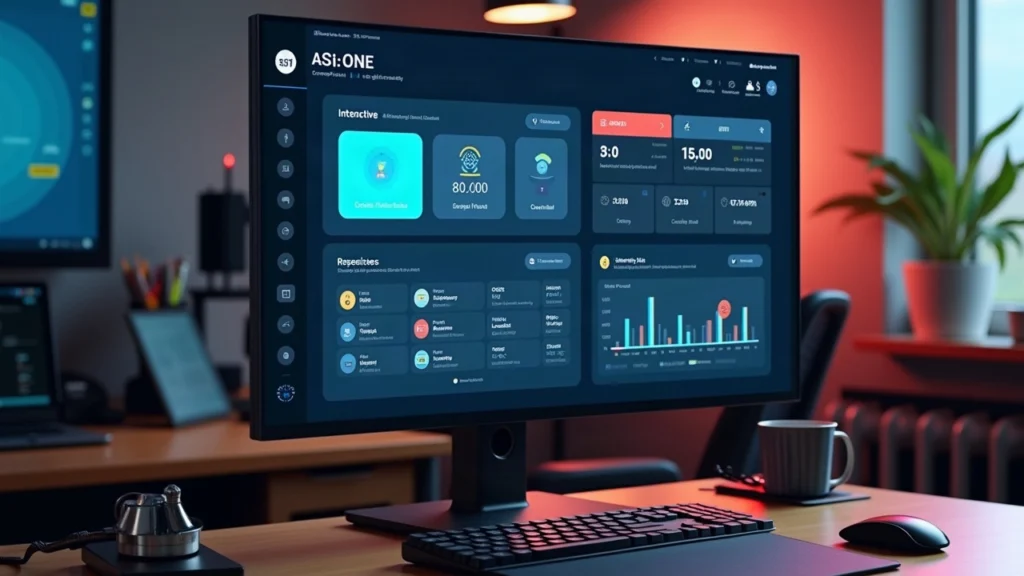
Fetch.ai is expanding the developer stack around ASI with new ways for autonomous agents to call external tools, present interactive interfaces and connect with third-party AI frameworks. The current architecture increasingly positions ASI as a discovery and interaction layer that can route user requests to specialized Agentverse agents capable of executing multi-step tasks, rather than limiting the platform to conventional text generation.
That model builds on Fetch.ai’s broader effort to standardize how agents are built, registered and invoked. The platform already directs developers through uAgents, Agentverse and structured communication protocols, a workflow reflected in its recent developer checklist for interoperable AI agents. The latest tooling extends that stack from agent discovery toward richer execution, external-service access and interactive user workflows.
Interactive cards are live via ASI:One.
Your Personal AI can now return a carousel, a form, a review card or a custom layout. You just tap.
Watch how it works 👇 pic.twitter.com/fZd8k3NqSl
— Fetch.ai (@Fetch_ai) October 25, 2026
Interactive Cards Move Agents Beyond Text Responses
One of the clearest additions is ASI1 Interactive Cards, which let agents render forms, carousels, review screens and custom layouts directly inside ASI conversations. The cards allow a complete workflow to remain inside the chat interface while still collecting structured input and presenting selectable results, reducing the need for developers to build a separate frontend for every agent.
Fetch.ai’s current examples demonstrate that model with applications such as TripMate, where a user can search travel inventory through MCP, receive results in a carousel, review a selection and move toward booking without leaving the conversational flow. Interactive Cards provide the presentation layer, while the underlying agent still depends on external APIs, tools or services to perform the actual task.
The same distinction applies to payments. Fetch.ai now documents a Stripe agent that combines ASI reasoning with uAgents and Stripe’s API to create products, prices and checkout links. The Stripe integration demonstrates agent-triggered commerce, but the documented implementation creates payment links rather than giving ASI unrestricted authority to move customer funds autonomously. That development fits the wider shift toward machine-to-machine payment infrastructure across agent ecosystems.
Framework Adapters Broaden the Agent Stack
Fetch.ai has also widened interoperability with established AI development frameworks. Its uAgents Adapter supports LangChain, LangGraph, CrewAI and MCP integrations, while separate documentation shows a Google Gemini-powered agent being registered on Agentverse and queried through ASI. ASI can therefore discover and invoke agents powered by external frameworks or models without requiring those systems to become native ASI components.
MCP extends that architecture by allowing uAgents to connect with external tool servers and expose those capabilities through Agentverse. A registered agent can act as a bridge between ASI and live tools such as databases, search services or other APIs, making tool execution part of a routed agent workflow rather than merely returning model-generated text. Similar standardization efforts have already appeared through MCP infrastructure on Hedera.
Developers working outside Python also have a documented Node.js and TypeScript route through uagent-client, including examples for Next.js and React applications. The client communicates with Fetch.ai agents through a Python bridge process and Agentverse rather than turning JavaScript applications into native uAgents directly. That architectural requirement also means conventional serverless environments such as Vercel and Netlify are not supported by the documented setup without separate persistent backend infrastructure.
These additions arrive after Fetch.ai reported nearly 3 million agents across its marketplace environment. A large agent registry establishes infrastructure scale, but the more meaningful test is whether those agents are repeatedly discovered, invoked and used to complete real workflows. Interactive Cards, MCP connectivity and external framework adapters target that usage layer rather than simply increasing the number of registered agents.
The direction also brings larger security and authorization requirements. Wallets and programmable payment systems are increasingly giving software agents direct execution capabilities, as seen with XRPL agent-payment infrastructure. As ASI agents gain access to external tools and commerce APIs, the relevant boundary shifts from model intelligence alone toward permissions, credentials and exactly which actions each agent is authorized to execute.
Tyler Anderson
Hi there! I'm Tyler Anderson from Sweden, and I'm a Web3 Reporter. My main focus is exploring the evolution of Web3, from DAO governance to the real utility of decentralized protocols.
More from Tyler Anderson →This article is for information only and is not investment advice. We report under our Editorial Policy; to flag an error, see our Corrections Policy.