
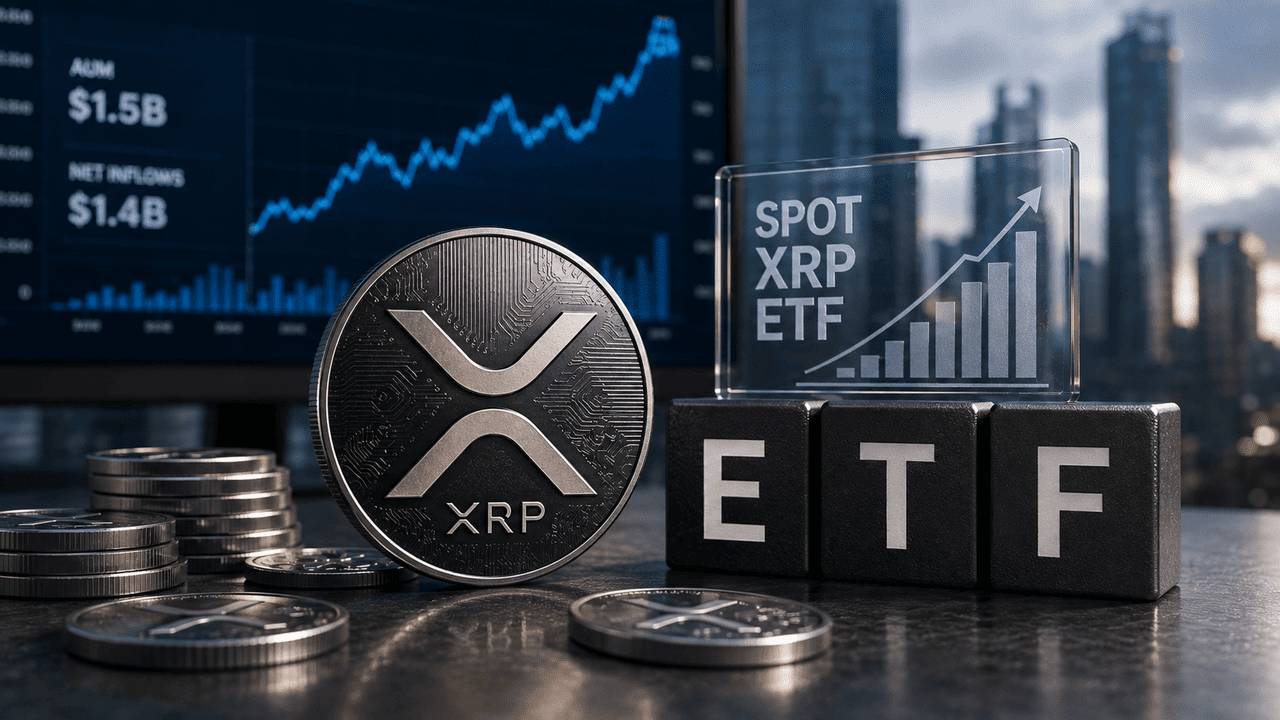
Spot XRP ETFs have changed how investors track utility tokens through regulated products, fund flows, and institutional filings. By July 2026, U.S. spot XRP ETFs have held about $1.5 billion in assets under management and $1.4 billion in cumulative net inflows. The products now place XRP beside Bitcoin, Ethereum, and Solana in the listed crypto fund market.
The shift gives XRP a clearer public valuation framework than many utility tokens. Investors can now compare assets, trading volume, fees, and institutional holdings across regulated products. While ETFs do not determine XRP’s market price on their own, they provide transparent data on fund flows, assets under management, and institutional participation that offer additional insight into investor demand.
Spot XRP ETFs Expand Regulated Market Access
Seven primary spot XRP products now trade on U.S. exchanges and offer direct exposure through brokerage accounts. The group includes Bitwise XRP ETF, Canary Capital XRPC, Franklin Templeton XRPZ, and Grayscale GXRP. Other listed products include 21Shares TOXR, REX-Osprey XRPR, and the Bitwise 10 Index.
These products give investors access to XRP without managing wallets or moving tokens onchain. Their arrival followed regulatory updates in late 2025, when several asset managers launched spot XRP funds.
Cost and structure also shape how investors compare issuers. Franklin Templeton’s XRPZ carried a 0.19% management fee, making it the lowest-fee product in the group. REX-Osprey’s XRPR carried a 0.75% expense ratio, while Grayscale’s GXRP came from a trust conversion.
Institutional Holdings Meet Slower Inflows
Spot XRP ETFs attracted strong early demand after their November 2025 launches. The funds gathered more than $1.4 billion in net inflows and locked about 977.4 million XRP.
Regulatory filings show more than 83 financial institutions reported spot XRP ETF allocations. Goldman Sachs disclosed a $153.8 million combined position across Bitwise, Franklin Templeton, Grayscale, and 21Shares products. The position represented about 73% of the top 30 institutional holdings reported for those funds.
Other filings showed multi-million dollar exposure from Millennium Management and Citadel. Institutional portfolios also spread positions across different issuers to reduce single-fund exposure risk.
Retail investors still represented about 84% of total cumulative inflows into XRP ETFs. This share suggests individual investors remained the main demand base, even after larger firms entered the market. By July 2026, fresh inflows slowed to about $12.43 million for the month.
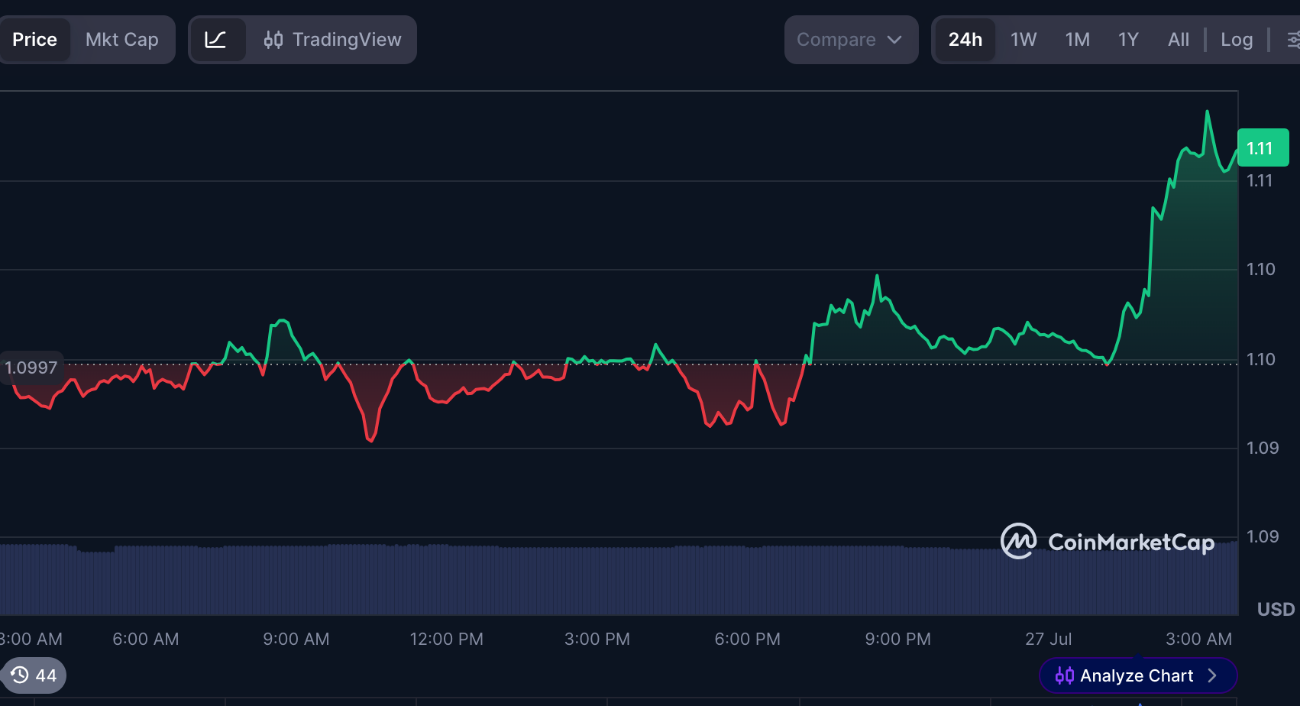
Source: CoinMarketCap
The slowdown helps explain why ETF approval has not produced a sustained upward price trend by itself. XRP traded around $1.10 to $1.15 during the period despite the funds continuing to hold substantial token balances. ETF demand remains one factor influencing the market, while broader supply dynamics and overall investor sentiment continue to affect price formation.
Policy and Supply Shape XRP’s ETF Era
The March 2026 joint SEC and CFTC rule classified XRP and 15 other assets as digital commodities. The rule placed XRP secondary market trading under the CFTC framework used for commodity-style assets.
Analysts said the rule could support the regulatory path for spot XRP ETFs by reducing uncertainty around the asset’s classification in secondary markets. The change also provides a clearer regulatory framework for institutions evaluating XRP exposure, although market participants continue to monitor the progress of the CLARITY Act in the Senate.
CLARITY passes or fails, doesn't really change XRP's setup
XRP already won its own clarity battle in court. that ruling isn't going anywhere regardless of what Congress does
so if CLARITY passes, XRP's just further ahead. if it stalls, XRP's still the one asset institutions can… https://t.co/FAPSIIYBhJ
— 𝗕𝗮𝗻𝗸XRP (@BankXRP) July 26, 2026
A formal Senate vote could give XRP and other digital assets firmer statutory treatment. The legislation remains pending, so some investors may wait before expanding long-term allocations. Policy clarity remains one factor behind the slower pace of new ETF inflows.
However, policy is not the only factor shaping XRP’s ETF era. Monthly escrow releases also remain part of the price debate because new supply can reduce ETF demand effects. Releases of 200 million to 400 million tokens can offset buying when trading demand weakens.
Profit-taking during macro uncertainty can also limit price gains, even when funds add exposure. That explains the gap between large ETF holdings and XRP’s softer trading range.
Consequently, XRP’s ETF era has changed how utility tokens are valued through regulated holdings, inflows, and institutional filings. The next test is whether ETF demand can outpace escrow releases and slower institutional inflows.