Crypto Advocacy Groups Urge Congress to Pass Mining and Staking Tax Bill Without Changes
Crypto groups urge Congress to pass H.R. 9175, clarifying mining and staking tax rules with deferral for validation rewards.

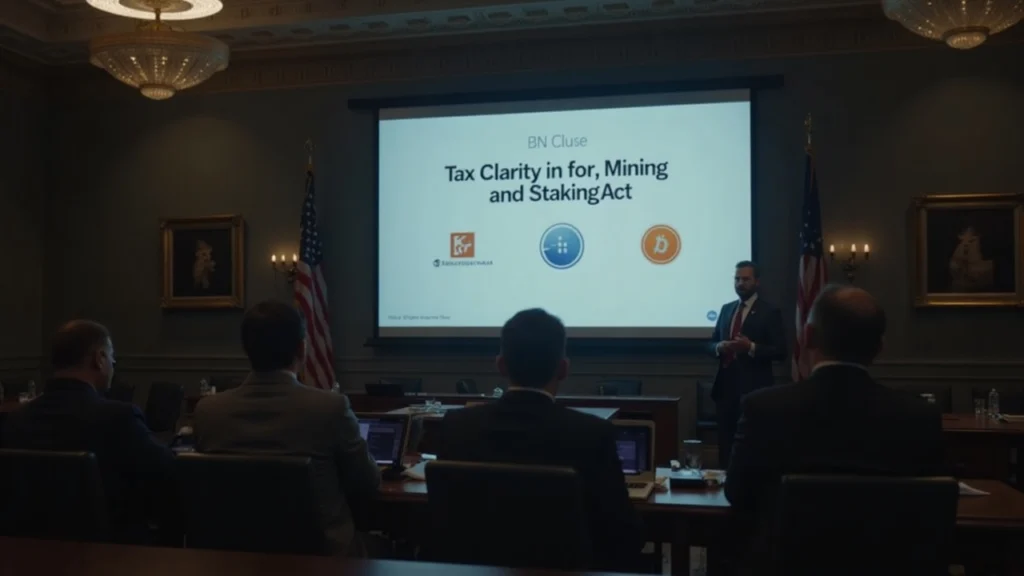
Three major cryptocurrency advocacy organizations have issued a joint call to the U.S. House of Representatives to advance the Tax Clarity for Mining and Staking Act (H.R. 9175) in its current form. The Blockchain Association, the Crypto Council for Innovation (CCI), and The Digital Chamber submitted a joint letter to the House Ways and Means Committee, describing the bill as a “durable compromise” for the industry.
The proposed legislation, introduced by Representative Mike Carey, seeks to resolve a long-standing operational hurdle for U.S.-based validators and miners: the timing of tax obligations. Under current Internal Revenue Service (IRS) interpretations, rewards generated from securing decentralized networks are often treated as immediate income at the moment of receipt, even if the assets have not been liquidated.
Shifting Tax Obligations to Point of Sale
H.R. 9175 provides an operational choice for taxpayers engaging in proof-of-work mining or proof-of-stake validation. Instead of forcing participants to recognize income immediately upon receiving rewards, the bill allows them to defer the tax hit until the assets are actually sold or exchanged.
The advocacy groups argue that the current tax treatment creates significant cash flow constraints. By requiring immediate payment on rewards that may be illiquid or volatile, the tax code can force operators to sell a portion of their holdings simply to cover tax liabilities before they can reasonably monetize their activity. According to the industry groups, this pressure discourages domestic validation activity and shifts the competitive advantage to foreign jurisdictions with more flexible tax frameworks.
A Unified Push Amid Legislative Pressure
The request to pass the bill “as is” suggests the industry is prioritizing legislative speed and certainty over potential further refinements. “The tax code should not force Americans who help secure decentralized networks to sell assets before they can reasonably monetize them,” stated Summer Mersinger, CEO of the Blockchain Association, in a statement accompanying the letter.
The push for H.R. 9175 comes as other digital asset regulations, such as the CLARITY Act regarding stablecoins, continue to face debate in the Senate. While banking groups have lobbied to tighten stablecoin rules to prevent deposit flight, the tax clarity bill focuses specifically on the infrastructure layer of the crypto economy—the miners and stakers who secure more than $1.7 trillion in digital assets.
Implementation and Status
The bill is currently under consideration by the House Ways and Means Committee. If passed, it would standardize the tax workflow for thousands of U.S. entities and individuals providing infrastructure services to blockchain networks. The industry letter notes that providing this option would bring digital asset taxation into closer alignment with how other asset classes are handled, where income is typically realized upon a sale rather than at the moment of production.
While the bill has gained traction among industry proponents, it faces a narrow legislative window before the August recess. Parallel efforts in the Senate, led by Senator Cynthia Lummis, have sought similar tax deferral language, though H.R. 9175 remains the primary vehicle for this specific change in the House.
Travis Bennett
Hello! Let me introduce myself: I'm Travis Bennett, a Policy Analyst and Web3 Reporter based in Scotland. My main job is to navigate the maze of global crypto regulation. For years, I have been analyzing how laws and government decisions shape the future of this industry, always with a critical eye.
More from Travis Bennett →This article is for information only and is not investment advice. We report under our Editorial Policy; to flag an error, see our Corrections Policy.