Scaramucci Warns CLARITY Act Could Stall Until 2029
Scaramucci warns the CLARITY Act may stall until 2029 as banking lobbying and Senate divisions threaten crypto rules.

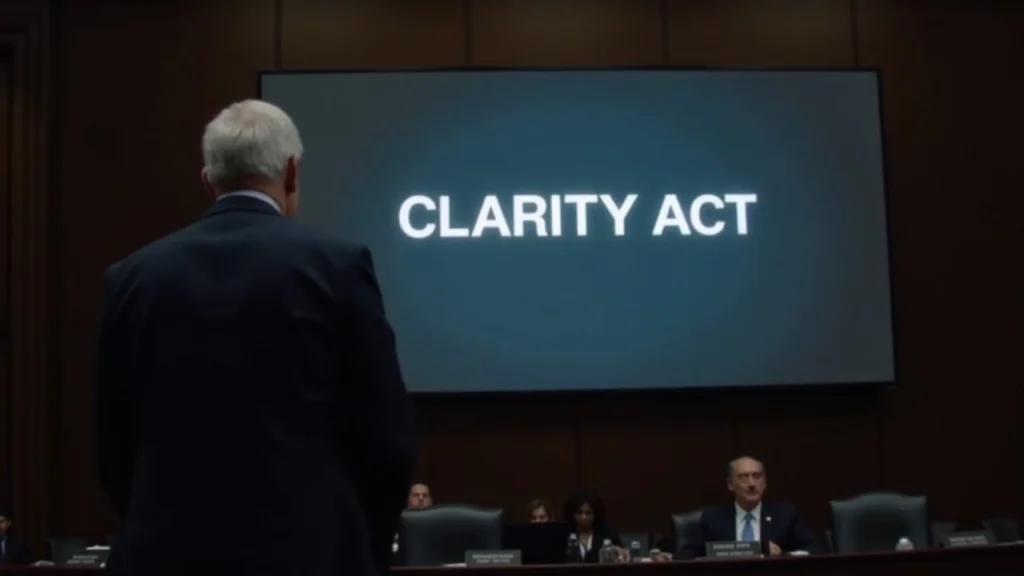
The Senate Banking Committee has scheduled a May 14, 2026 markup on the CLARITY Act, but Anthony Scaramucci warned that the bill’s Senate path could stretch to 2029 or later if banking lobbying and political divisions continue to block bipartisan consensus.
The legislation passed the House in July 2025, yet its Senate future remains unsettled. For institutional investors and tokenization teams, the delay keeps regulatory ambiguity at the center of product planning, especially outside Bitcoin, where legal treatment remains less certain.
Stablecoin Compromise Fails to End the Fight
A recent bipartisan compromise on stablecoin yield restored Coinbase’s support by banning passive yield while allowing activity-based rewards. Still, the revised language has not neutralized opposition from banks, policymakers and critics focused on financial-stability and DeFi risks.
Scaramucci, founder of SkyBridge Capital, said the bill’s momentum has been weakened by aggressive banking lobbying over stablecoin rules. He also pointed to a strained political environment around crypto, including controversies tied to former President Donald Trump’s pre-inauguration memecoin activity.
Those events reportedly generated roughly $600 million to $700 million in proceeds and antagonized some pro-crypto Democrats. In Scaramucci’s view, that political fallout has made bipartisan cooperation harder, even for lawmakers who support clearer digital-asset rules.
“I expect the bill may not clear the Senate until 2029,” Scaramucci said, summarizing his concern that the current Senate math may not support passage. Senator Cynthia Lummis has also warned that missing the window before the November 2026 midterms could push passage to at least 2030.
Regulatory Uncertainty Keeps Capital Concentrated in Bitcoin
The market impact is already visible in Scaramucci’s analysis. Institutional capital has concentrated on Bitcoin after ETF approvals, while other layer-1 networks remain stuck in legal uncertainty and have seen slower institutional adoption.
That split affects more than asset allocation. Tokenization and real-world asset projects face delayed rollout timelines and compliance uncertainty, while exchanges and custodians must prepare for shifting rules around stablecoin rewards and treasury management.
Industry forecasts remain divided. TD Cowen has modeled a scenario in which implementation slips to 2029 if the Senate vote is delayed, while Mike Novogratz has offered a more optimistic estimate of roughly 70% odds that the bill passes by June 2026.
The May 14 markup is therefore a critical hinge. A successful committee vote could move the bill toward floor scheduling, while a failed or delayed markup would strengthen the longer timeline that Scaramucci has warned about.
The practical response is to plan for prolonged ambiguity. Liquidity and product allocation will likely keep favoring assets with clearer institutional pathways, while compliance and engineering teams need flexible architectures that can adapt to whichever version of the bill survives.
Tyler Anderson
Hi there! I'm Tyler Anderson from Sweden, and I'm a Web3 Reporter. My main focus is exploring the evolution of Web3, from DAO governance to the real utility of decentralized protocols.
More from Tyler Anderson →This article is for information only and is not investment advice. We report under our Editorial Policy; to flag an error, see our Corrections Policy.