Taiwan Lawmaker Pushes National Bitcoin Reserve
Taiwan lawmaker Ju-Chun Ko proposes retaining seized Bitcoin as the foundation for a potential national strategic reserve.

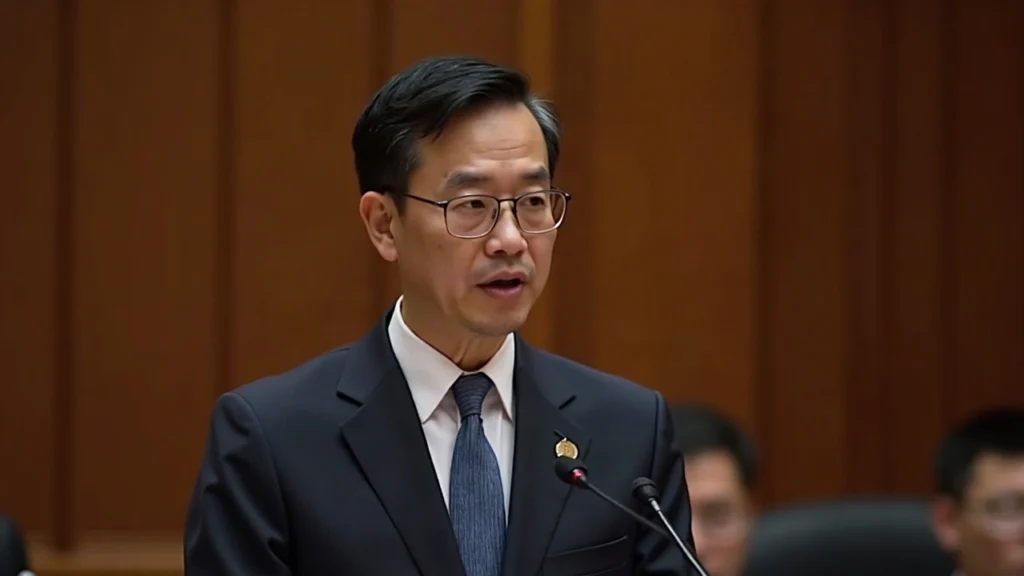
Taiwanese legislator Ju-Chun Ko is pressing the government to establish a national Bitcoin reserve, arguing that cryptocurrency already held through judicial seizures could form the initial foundation of a sovereign digital-asset strategy. On his official Bitcoin Strategic Reserve Initiative page, Ko advocates retaining confiscated Bitcoin, developing centralized government accounting and evaluating BTC as part of Taiwan’s strategic reserves. The proposal remains a legislative policy initiative rather than an approved government reserve program.
Ko’s campaign has already produced one concrete result. Following inquiries to the Executive Yuan and Ministry of Justice, authorities completed an inventory of seized digital assets, with Ko’s office reporting that Taiwan held more than 210 BTC as of October 31, 2025. His next objective is to prevent those holdings from being routinely auctioned and instead preserve them while the government develops a formal framework for custody and asset management.
Seized Bitcoin Could Form Initial Reserve
Ko describes confiscated Bitcoin as Taiwan’s existing starting point for a reserve, reducing the need for an immediate government purchase program. His proposal calls for a unified digital-asset ledger, secure custody arrangements and clearer rules governing when seized crypto can be sold. The retention strategy would convert assets obtained through law enforcement into longer-term government holdings without requiring an immediate allocation of taxpayer funds.
The initiative goes further than managing confiscated coins. Ko has also asked Taiwan’s central bank to consider Bitcoin among potential national strategic reserve assets, suggesting a benchmark of 0.1% of GDP or another limited share of foreign exchange reserves. That broader allocation remains only a recommendation and has not been adopted by Taiwan’s monetary authorities.
The scale of Taiwan’s existing reserves makes that distinction important. The Central Bank of the Republic of China (Taiwan) reported $594.27 billion in foreign exchange reserves at the end of July 2026. Any decision to allocate even a small percentage of those reserves to Bitcoin would be materially different from simply retaining crypto already seized by judicial authorities.
Government Approval Is Still Required
Ko’s policy rationale centers on diversification, financial sovereignty and resilience against potential currency or geopolitical shocks. His office says Premier Cho Jung-tai and Central Bank Governor Yang Chin-long previously agreed to provide assessments of Bitcoin holdings and its possible reserve role. Those reviews indicate that the issue has entered formal government discussion, but they do not amount to authorization for Bitcoin purchases or reserve designation.
Taiwan’s government already has experience holding digital assets in enforcement contexts. The Ministry of Justice has documented cases in which prosecutors seized cryptocurrencies and transferred them into government-controlled custody infrastructure, demonstrating that public agencies can technically safeguard blockchain assets. Turning those enforcement holdings into a strategic reserve, however, would require a separate policy decision covering accounting, custody, disposition and oversight.
Ko’s proposal is best understood as a two-stage strategy: preserve Bitcoin the government already controls and then determine whether digital assets deserve a formal place alongside traditional national reserves. The decisive step will be whether Taiwan’s executive and monetary authorities move from assessment to an explicit sovereign Bitcoin policy.
Colin Harris
I'm Colin Harris, L1s Analyst and Web3 Reporter for the United States. My day-to-day involves diving into the fundamental layers of the ecosystem, specializing in Layer 1 (L1s) networks.
More from Colin Harris →This article is for information only and is not investment advice. We report under our Editorial Policy; to flag an error, see our Corrections Policy.