Seoul Prosecutors Charge Five in First DEX Rug Pull Case
Seoul prosecutors charged five people in South Korea’s first DEX rug pull case tied to Solana memecoin CATFI.

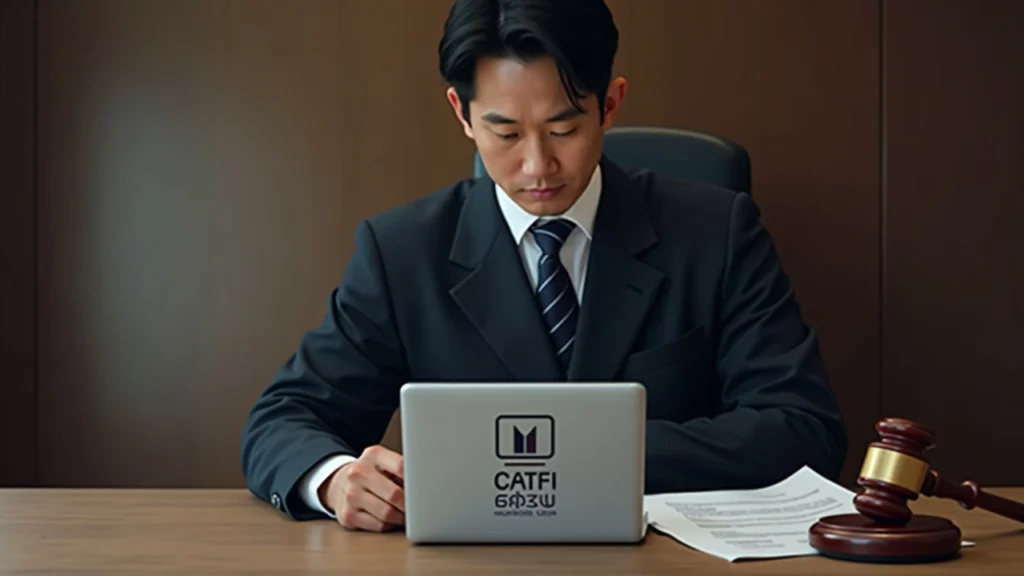
Seoul prosecutors charged five people on May 27, 2026, in what they described as South Korea’s first criminal prosecution of a decentralized-exchange rug pull. The case centers on CATFI, a Solana-based memecoin, and signals a broader enforcement push into decentralized markets.
The indictment alleges coordinated market manipulation, rapid token inflation and a planned liquidity drain that left retail buyers with losses. Prosecutors invoked the Virtual Asset User Protection Act, extending fraudulent-trading enforcement into activity that unfolded through launchpads, DEXs and social promotion.
CATFI Launch Becomes Criminal Case
Prosecutors said the group used Pump.fun to issue CATFI before amplifying the token’s price by roughly 1,001x within 26 hours of listing. The main suspect, identified by the surname Park, reportedly promoted the token through a social account using the alias “Eth Father.”
Investigators allege that the promotion was presented as independent endorsement while the operators controlled the market structure behind the token. That gap between public messaging and hidden supply control is central to the prosecution’s theory.
The group allegedly used multiple wallets, circular trades and wash trading to fabricate activity and conceal control. On-chain wallet behavior is now being treated as criminal evidence, not merely a market-monitoring signal.
Prosecutors attributed about KRW 900 million, or roughly $650,000, in combined losses across 256 investors. The alleged illicit gains were near KRW 400 million, or about $260,000, while reports said roughly 6,000 buyers entered the trade before the collapse.
DEX Enforcement Enters a New Phase
The indictment marks the first reported use of the Virtual Asset User Protection Act’s fraudulent-trading provisions since the law took effect in July 2024. Seoul’s virtual-asset investigative unit combined on-chain forensics with off-chain social-media analysis, showing how enforcement teams are linking wallet activity to promotional conduct.
Prosecutors said they would respond firmly to schemes that erode market trust. That warning raises the legal stakes for memecoin issuers, especially those using launchpads and decentralized venues to avoid conventional listing scrutiny.
The charges include two suspects detained and indicted, one charged without detention and two alleged accomplices accused of helping evade investigators. The structure of the case suggests prosecutors are targeting both operators and support networks around DEX manipulation.
Wash trading, wallet clustering and coordinated promotion can now feed criminal cases, even when the trading venue itself is decentralized.
The case is likely to influence how memecoins are launched, promoted and monitored in South Korea. Market-surveillance teams should treat DEX activity, social signals and concentration patterns as linked risk indicators as enforcement expands through 2026.
Tyler Anderson
Hi there! I'm Tyler Anderson from Sweden, and I'm a Web3 Reporter. My main focus is exploring the evolution of Web3, from DAO governance to the real utility of decentralized protocols.
More from Tyler Anderson →This article is for information only and is not investment advice. We report under our Editorial Policy; to flag an error, see our Corrections Policy.