FBI and Indonesian police dismantle W3LL phishing network tied to $20 million in attempted fraud
The FBI and Indonesian police dismantled W3LL, a phishing platform tied to $20 million in attempted fraud and thousands of stolen accounts.

A joint U.S.-Indonesian operation has dismantled one of the more industrialized phishing services in recent years, cutting off a platform that enabled cybercriminals to steal credentials at scale and attempt more than $20 million in fraud. The takedown targeted W3LL, a phishing kit and marketplace that turned credential theft into a low-cost commercial service, complete with counterfeit login pages, session capture and access resale. What made the case notable was not just the scale of the fraud, but the degree to which phishing had been productized into a full-service cybercrime business.
The FBI’s Atlanta field office said the investigation was a first-of-its-kind joint cyber operation with Indonesian authorities, underscoring how cross-border enforcement is becoming more central to disrupting cybercrime-as-a-service. Indonesian police detained the alleged developer, identified as G.L., while investigators seized infrastructure and key domains that supported the platform’s operations. That combination of arrests and infrastructure takedowns mattered because W3LL was not simply a toolkit passed around in forums; it was a functioning service layer for credential theft.
CASE UPDATE from @FBIAtlanta: FBI, Indonesian Authorities Take Down Global Phishing Network Behind Millions in Fraud Attempts
In a first-of-its-kind joint cyber investigation, the #FBI Atlanta Field Office and Indonesian law enforcement authorities have dismantled a… pic.twitter.com/Ewtu0ptsHd
— FBI (@FBI) April 13, 2026
A phishing kit built for scale, persistence and resale
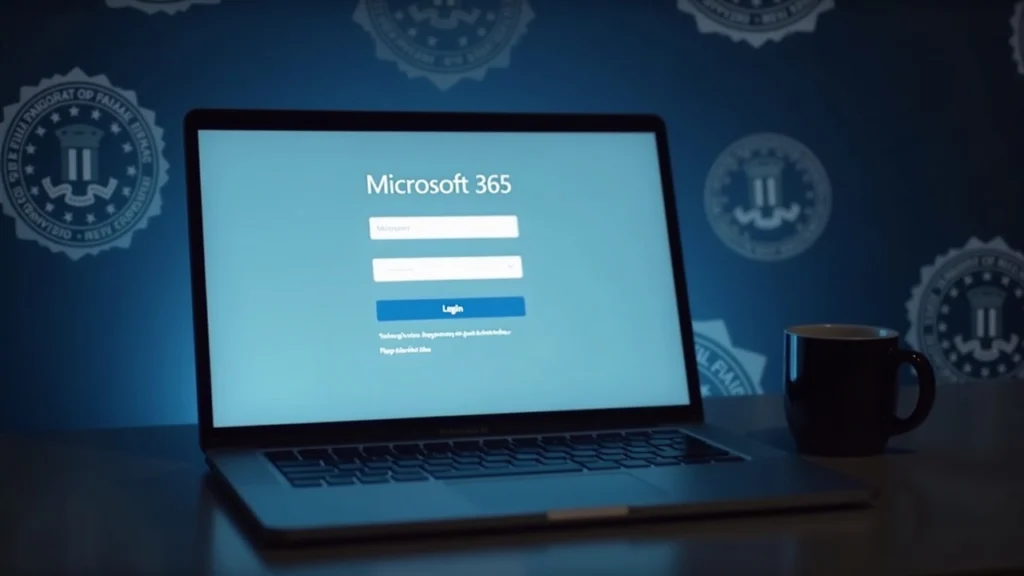
W3LL lowered the cost of entry for sophisticated phishing to about $500, giving criminals a ready-made package for building fake login pages that closely mimicked trusted portals, especially Microsoft 365. Once victims entered credentials, the kit did more than steal usernames and passwords. It also captured session data that allowed attackers to bypass multifactor authentication and maintain persistent access to compromised accounts. That turned a familiar phishing lure into a much more durable account-takeover tool, especially for organizations relying heavily on federated logins and session-based trust.
The phishing kit was supported by W3LLSTORE, a marketplace that sold compromised credentials and unauthorized access, including remote desktop access. Between 2019 and 2023, the FBI said the marketplace facilitated the sale of more than 25,000 compromised accounts. Even after W3LLSTORE shut down, the operation kept moving through encrypted messaging channels, and from 2023 to 2024 the kit was used in attacks on more than 17,000 victims worldwide. The shutdown of the storefront did not end the business model; it simply pushed distribution into more private channels.
The larger lesson is about operational resilience, not just arrests
The takedown is a meaningful law-enforcement win, but it also highlights a deeper problem for companies that manage customer identity, financial access or institutional wallet permissions. Tools like W3LL do not depend on zero-day exploits or highly specialized tradecraft. They succeed by scaling social engineering, session hijacking and credential resale in ways that conventional password hygiene alone cannot fully stop. For security teams, the real takeaway is that phishing now behaves less like a nuisance attack and more like a modular access industry.
That is why the case should resonate beyond cybersecurity circles. Firms that rely on cloud identity, privileged access or customer-facing authentication flows need to assume that a harvested session can be as dangerous as a stolen password, and often more useful to the attacker. The W3LL operation shows how cheaply those capabilities can now be bought, repackaged and redeployed. The platform may be gone, but the model it embodied will remain a live threat unless defenses evolve as quickly as the kits being sold against them.
Tyler Anderson
Hi there! I'm Tyler Anderson from Sweden, and I'm a Web3 Reporter. My main focus is exploring the evolution of Web3, from DAO governance to the real utility of decentralized protocols.
More from Tyler Anderson →This article is for information only and is not investment advice. We report under our Editorial Policy; to flag an error, see our Corrections Policy.