CZ Burns Millions in Spam Meme Coins
Changpeng "CZ" Zhao sent millions in unsolicited meme coins to a burn address, describing the move as wallet cleanup rather than a market signal.

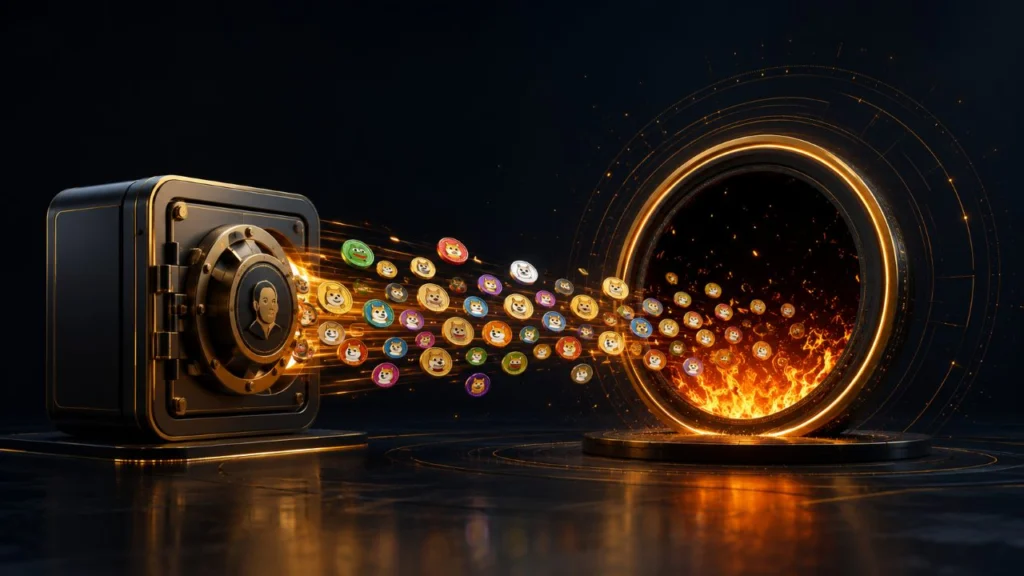
Binance founder Changpeng “CZ” Zhao sent 700 million CZ tokens and 400 million TCC tokens from his public donation wallet to the well-known 0x000…dEaD address on July 12, permanently placing them beyond circulation. Estimates valued part of the transferred batch at roughly $1.6 million when the transactions occurred. The spectacle looked like a deliberate supply intervention, but Zhao described it as basic wallet housekeeping. His clarification arrived after observers interpreted the transfers as possible endorsements or market signals, exposing a familiar crypto paradox: transparent blockchains reveal every movement instantly, while the owner’s purpose can remain unclear until explained publicly afterward.
Wallet Clutter Becomes an Unexpected Market Event
Zhao said he had not checked the address for some time and found tens of thousands of tokens cluttering an interface that displayed them poorly. Rather than receive more unsolicited assets and later remove them manually, he suggested projects send unwanted tokens directly to the burn address. The wallet had become an advertising surface for issuers seeking association with a famous name. By transferring coins to an inaccessible destination instead of selling them, Zhao avoided taking market proceeds, yet the act still altered circulating supply and generated attention for assets he insisted carried no relationship to him or his companies.
🔶 最近BSC上不少memecoin转入CZ个人地址,昨晚CZ直接把其中几个市场最热的拉进销毁黑洞。
🔸很多人问这是什么操作?在我看来,这就是CZ用行动在回应我们:他一直都在,和我们同在。
🔸币安从0到近4亿用户,9年时间,CZ始终轻资产、重服务,把用户保护放在第一位。… pic.twitter.com/Ln4o1Pl0th
— Crypto🔶小宇 (@four_xyg) July 13, 2026
Burn addresses function as one-way destinations because nobody is known to control the private keys required to move their balances. Sending tokens there does not erase blockchain records, but it makes the assets unusable under normal assumptions. That mechanical finality transformed a cleanup operation into an event traders could frame as scarcity. The transaction reduced the transferable amounts of CZ and TCC held in Zhao’s wallet, although it did not change their smart contracts or guarantee stronger demand. For thinly traded meme coins, even an association with a prominent wallet can overwhelm fundamentals and reorganize short-term expectations among speculative buyers.
Famous Wallets Create an Attribution Problem
The episode reflects a recurring promotional tactic in which token creators distribute allocations to recognizable public addresses without permission. The transfer can make a celebrity, founder or developer appear connected to a project, even when the recipient never requested the assets. Onchain possession can manufacture a misleading appearance of endorsement before the recipient says anything. Zhao has previously warned projects against sending tokens to his addresses in expectation of interaction, and earlier cleanups removed unsolicited holdings. The strategy therefore creates an uncomfortable incentive: projects may gain publicity whether the famous recipient keeps, sells or destroys the tokens afterward in view.
Zhao’s action demonstrates why burns should not be treated as bullish evidence. Removing supply can support a scarcity narrative, but price depends on liquidity, ownership concentration, demand and the credibility of the project behind the token. The transaction was irreversible, while the market meaning attached to it remained reversible. Traders could interpret the burn as favorable, then abandon that view once Zhao denied involvement or momentum weakened. The lasting takeaway concerns attribution, not valuation: a token appearing in a prominent wallet may represent spam rather than sponsorship, and an onchain transfer may be operational maintenance rather than an investment signal.
Mia Thompson
I am Mia Thompson, a Blockchain Reporter specializing in Altcoins, and I am from Mexico. My day-to-day work consists of exploring the ecosystem beyond Bitcoin.
More from Mia Thompson →This article is for information only and is not investment advice. We report under our Editorial Policy; to flag an error, see our Corrections Policy.