

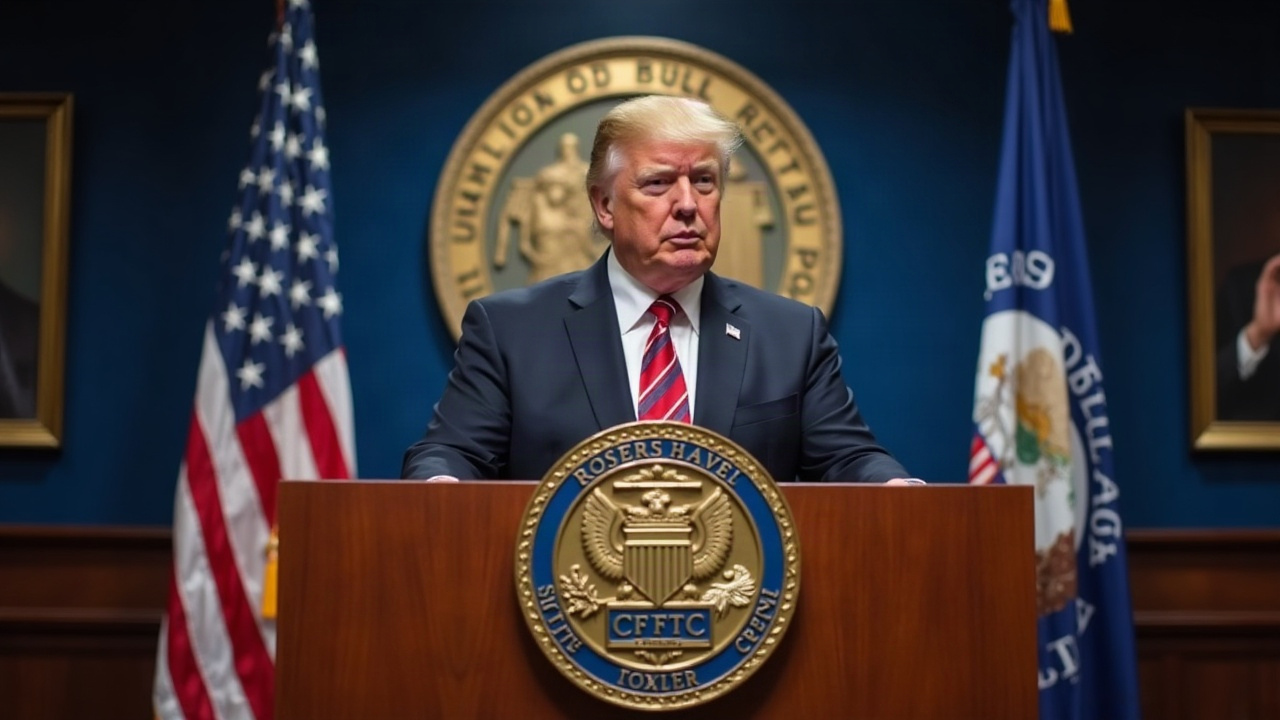
Commodity Futures Trading Commission Chairman Michael S. Selig says the agency is moving ahead with crypto rulemaking under its existing statutory authority after the Senate failed to advance the CLARITY Act. The CFTC’s regulatory alternative was already under development before the September 15 vote, but the legislative setback has shifted greater attention toward agency-led market structure. Selig told CNBC this week that “it’s go time” and said regulators have substantial existing authority to act.
The groundwork was publicly laid during Selig’s August 20 Innovation Advisory Committee remarks, when he said he had directed CFTC staff to explore rules creating a crypto-asset market structure under current law. One concept would allow existing registrants and qualifying crypto exchanges to operate as a form of designated contract market for leveraged or margined crypto trading under tailored CFTC rules. Selig also directed staff to engage with on-chain protocol developers on compliant operating models.
Existing Authority Has Limits in Spot Markets
The CFTC already has broad authority over commodity derivatives and certain leveraged or margined commodity transactions, but existing law does not give the agency the comprehensive spot digital-commodity jurisdiction contemplated by the CLARITY Act. Selig himself said in August that legislation would establish statutory jurisdictional boundaries and core principles for crypto spot markets that agency action alone cannot reproduce in the same way.
The Senate underscored that legislative gap on September 15. Senators voted 49–50 against cloture on the motion to proceed to H.R. 3633, leaving the measure 11 votes short of the 60 required to advance through that procedural step. The result was not final rejection of the bill; it prevented the Senate from moving into formal consideration under that vote. Digital Coin Journal previously detailed the failed CLARITY Act procedural vote.
Two days later, the CFTC sent a crypto rulemaking package to the White House Office of Information and Regulatory Affairs. OIRA currently lists the submission as a “Prerule” under RIN 3038-AF80, with the combined title “Regulation Crypto Asset Transactions and Regulation Crypto Asset Markets.” Because the underlying materials have not yet been published, specific requirements covering exchanges, custody, surveillance or market structure cannot yet be stated as confirmed provisions.
SEC and CFTC Build Parallel Regulatory Tracks
The CFTC is not acting alone or filling an otherwise empty regulatory vacuum. In March, the SEC and CFTC jointly issued an interpretation and CFTC guidance addressing how federal securities laws apply to different categories of crypto assets and transactions. The agencies have therefore been developing an administrative framework in parallel with congressional negotiations for months.
The SEC followed in August with its own proposed Regulation Crypto Assets, including offering exemptions and a conditional investment-contract safe harbor. Digital Coin Journal previously examined the SEC’s Regulation Crypto Assets proposal. That proposal illustrates what agencies can accomplish through existing law, while also showing the distinction between regulatory rulemaking and the broader statutory authority Congress could create.
Selig has also established an Innovation Task Force covering crypto assets, blockchain technology, artificial intelligence and prediction markets. The group launched on March 24 and is intended to coordinate with other federal agencies, including the SEC. His more recent references to markets operating “24/7 on-chain” describe a regulatory modernization objective rather than a finalized set of technical standards.
That agency-led path had already been anticipated by market participants. Digital Coin Journal reported before the Senate vote that Coinbase CEO Brian Armstrong viewed SEC and CFTC action as an alternative route to greater regulatory clarity, while Bitwise CIO Matt Hougan argued that crypto development could continue even if CLARITY stalled. Those are industry assessments rather than guarantees that agency rules will provide the same durability or scope as legislation.
The next concrete milestone is OIRA’s review of RIN 3038-AF80 and publication of the CFTC’s actual proposed text. Only then will market participants be able to assess precisely which trading activities, registration pathways and compliance obligations the Commission intends to establish under existing authority. CLARITY remains pending in Congress, while the CFTC’s administrative route is advancing on a separate and legally narrower track.