Zcon7 Puts Zcash Governance and Consensus in Focus
Zcon7 brought Zcash developers and researchers together to debate consensus, shielded assets, governance and the network's next decade.

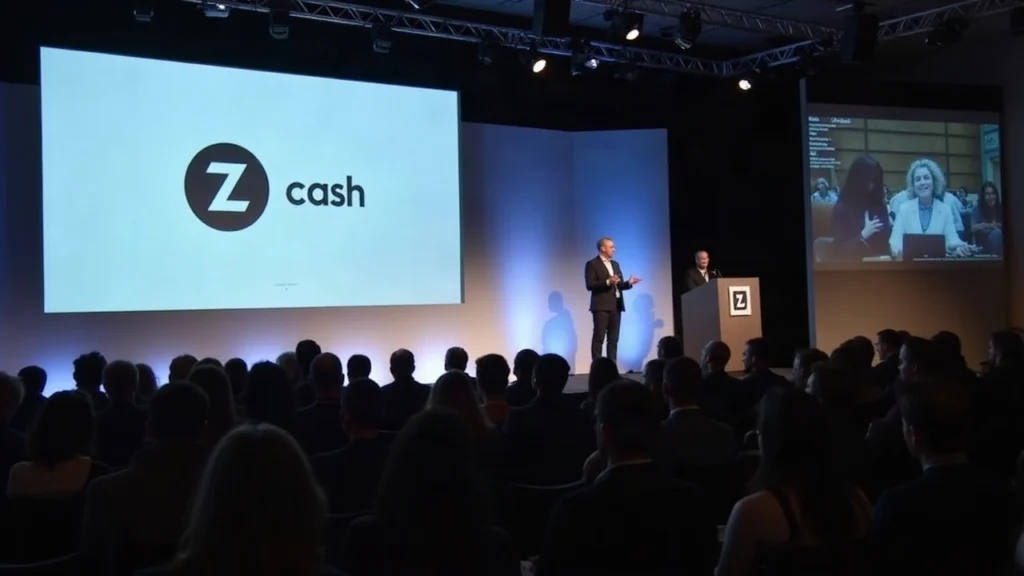
The Zcash Foundation has published its official recap of Zcon7, the privacy network’s annual community conference, which brought roughly 120 developers, researchers and ecosystem participants to Cancún from October 27 to 29. The gathering also marked Zcash’s 10th anniversary on October 28. Rather than announcing a fixed technical roadmap, Zcon7 centered on unresolved choices around governance, security, usability and the network’s long-term direction.
The official conference program shows that participants examined several potentially consequential protocol changes, including alternative consensus models and Zcash Shielded Assets. The conference framed these subjects as decisions still requiring technical development and community agreement, not as upgrades already approved for deployment.
Zcash Debates Consensus and Shielded Assets
One of the opening sessions examined the future of Zcash consensus, with participants comparing the network’s existing Proof-of-Work design against Proof-of-Stake and hybrid alternatives. The discussion covered security, decentralization, incentives, mining and long-term sustainability. No decision to migrate Zcash to Proof-of-Stake emerged from the event, making the session exploratory rather than an implementation milestone.
That debate follows a significant mainnet change already completed this month. NU7 activated on November 6 at block height 3,543,405, according to the official Zcash Improvement Proposal index. The upgrade reduced target block spacing to 25 seconds and introduced other consensus changes after Zebra 7.0.0 added stable NU7 support. The completed NU7 deployment is distinct from the longer-term consensus alternatives discussed at Zcon7.
Zcash Shielded Assets were another major discussion point. The proposed framework would extend Zcash’s shielded transaction model to custom assets, potentially allowing issuance, transfers and swaps without publicly revealing asset details in the same way as conventional transparent tokens. However, ZIPs 226, 227 and 228 remain drafts. ZSAs are not live on Zcash mainnet and were debated at Zcon7 precisely because their future inclusion remains unsettled.
That distinction matters after infrastructure providers have already adapted to more immediate protocol changes. Gemini, for example, migrated its Zcash backend to Zakura ahead of NU7, demonstrating production infrastructure changes around an approved network upgrade. A debate over ZSAs does not yet carry the same implementation status as an activated consensus upgrade or deployed node software.
Governance Becomes a Central Zcash Question
Governance and ecosystem funding occupied another substantial part of Zcon7. Participants debated whether the Development Fund should end in 2028 and held a workshop exploring alternative governance structures for the network’s next decade. The Foundation’s recap says attendees have subsequently begun writing ZIPs and submitting grant applications. The immediate output from the conference is therefore increased proposal and governance activity rather than a newly adopted administrative structure.
Those discussions come after Zcash development became more organizationally distributed during 2026. Zcash Open Development Lab, which absorbed former Electric Coin Company engineering talent, previously raised more than $25 million for protocol and privacy infrastructure development. The growing number of development organizations makes coordination, funding and protocol governance increasingly consequential alongside the cryptographic work itself.
Usability also remained part of the conference agenda, particularly around attracting developers and making financial privacy practical for users outside the existing crypto community. That concern parallels the broader debate over whether faster Zcash blocks can improve usability without diluting the network’s privacy-focused identity. Zcon7 ultimately highlighted a network with several competing development paths, but few of the most consequential long-term choices have yet been converted into finalized protocol upgrades.
Colin Harris
I'm Colin Harris, L1s Analyst and Web3 Reporter for the United States. My day-to-day involves diving into the fundamental layers of the ecosystem, specializing in Layer 1 (L1s) networks.
More from Colin Harris →This article is for information only and is not investment advice. We report under our Editorial Policy; to flag an error, see our Corrections Policy.