How Gorae Plans to Put EV Charging Infrastructure Onchain
Gorae and Sui plan onchain EV charging settlements across 50,000 South Korean chargers, with rollout starting in late 2026.

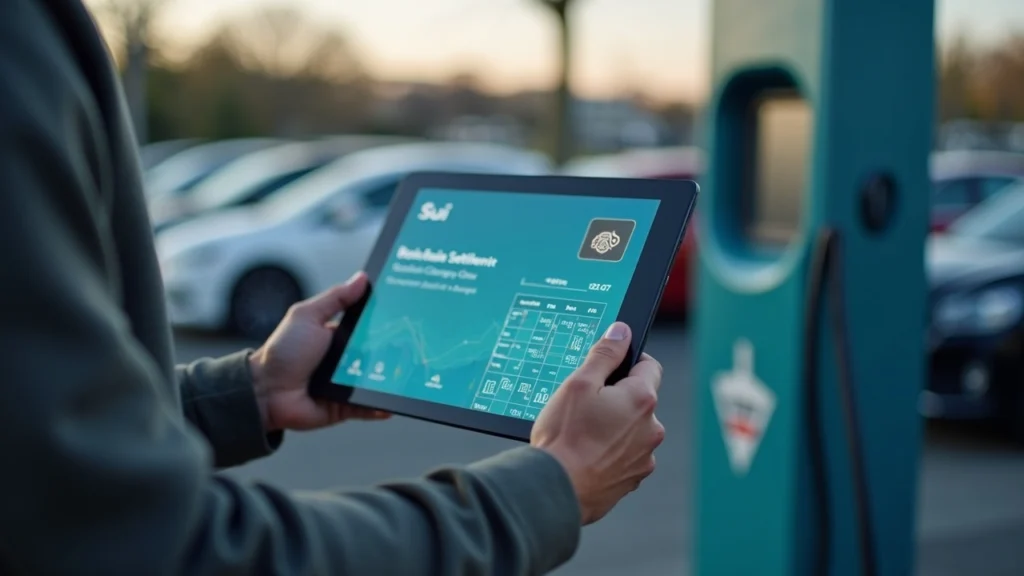
Gorae has announced plans with the Sui Foundation to connect more than 50,000 electric vehicle chargers in South Korea to blockchain-based settlement and data infrastructure. The phased rollout is scheduled to begin in the second half of 2026, working with an unnamed operator described as one of the country’s largest charge point operators. Expansion across the wider Asia-Pacific region, Europe and North America is planned afterward.
The project will use Sui to process payments and Walrus to preserve verifiable records of completed charging sessions. The initiative remains in a pre-deployment phase rather than operating across all 50,000 chargers today, and the official announcement does not include live transaction volume, active charger counts or production-performance data for the integration.
Settlement Layer Connects to Existing Charger Systems
Gorae is designed to operate above the management systems already used by charging operators. Once a charging session is completed, the platform reads the relevant activity and routes settlement through Sui while storing a verifiable session record through Walrus. The proposed architecture combines payment distribution and data verification within a single transaction workflow, allowing several parties to reference the same operational event.
Sui’s infrastructure allows several actions to be grouped within a Programmable Transaction Block, enabling payments to multiple stakeholders to succeed or fail together. According to the partnership announcement, Gorae intends to use this structure to distribute funds among parties such as operators and charger owners in one atomic transaction. Atomic settlement reduces the risk of one part of a multi-party payment completing while another remains unresolved, although the exact commercial allocation rules have not been publicly disclosed.
Walrus serves a different role by providing decentralized storage for the detailed records associated with each charging session. The platform describes its data as persistent and independently verifiable, meaning authorized parties can check whether stored information has been altered without relying exclusively on the entity that submitted it. Sui handles the transaction logic, while Walrus is intended to preserve the supporting operational data.
Gorae says the integration will not require charge point operators to replace their existing physical equipment. Its proposed Charger-to-Chain node technology acts as a software-level bridge between current charger-management systems and the Sui-Walrus stack. The absence of mandatory hardware upgrades could lower onboarding costs, but deployment will still require technical integration with the software and data systems used by participating operators.
Financing Benefits Remain a Project Objective
Charging records are commonly divided among driver applications, station operators, utilities and other service providers, with each participant maintaining a separate portion of the data. Gorae argues that this fragmentation makes roaming payments slower to reconcile and makes it more difficult for outside investors to verify a charger’s usage and revenue. A shared record could reduce information gaps between operators, asset owners and financing providers, provided the underlying data entering the system is complete and accurate.
The project ultimately aims to make charging infrastructure easier for capital markets to evaluate and finance. Consistent records of energy consumption, payments and operating activity could support due diligence on individual chargers or larger portfolios. That potential does not yet establish that charging stations have become a liquid or investable onchain asset class, as financing will still depend on ownership rights, contractual cash flows, regulation and investor demand.
Blockchain records can demonstrate that submitted data has not been altered afterward, but they do not automatically prove that the original offchain measurement was correct.
The planned international expansion will also require Gorae to navigate different payment, energy-market, privacy and digital-asset frameworks. No detailed timetable has been provided for deployments outside South Korea. The immediate test will be the H2 2026 rollout and whether the system can process real charging sessions reliably at the announced scale without requiring disruptive changes to existing infrastructure.
For now, the confirmed development is a planned integration connecting more than 50,000 chargers to Sui settlement and Walrus data storage. The project’s operational and financial impact remains unproven until production activity, settlement performance and adoption data become available.
Derek Vaughn
Hi! I'm Derek Vaughn, a Market Research Specialist based in Nigeria. I analyze crypto markets from a global perspective, trying to understand what's behind price movements and liquidity trends. I've been covering the digital ecosystem for several years, and my style is based on rigorous, data-driven research.
More from Derek Vaughn →This article is for information only and is not investment advice. We report under our Editorial Policy; to flag an error, see our Corrections Policy.