DOJ and FBI unmask international wash-trading network; 10 foreign nationals indicted
Ten foreign nationals were charged after an FBI crypto sting exposed alleged wash trading and pump-and-dump schemes.

Ten foreign nationals are facing federal charges after a U.S. undercover investigation exposed what authorities describe as coordinated wash trading and pump-and-dump activity tied to four crypto market-making firms. The case marks one of the clearest signals yet that U.S. enforcement is expanding beyond token issuers and into the infrastructure that shapes trading activity itself.
The charges, announced by the Department of Justice and the FBI, stem from an operation that authorities say was designed to uncover firms willing to manipulate trading volumes and prices. By targeting the mechanics of artificial market activity, the investigation pushed criminal enforcement directly into the market-making side of the crypto industry.
An undercover token was used to expose alleged manipulation
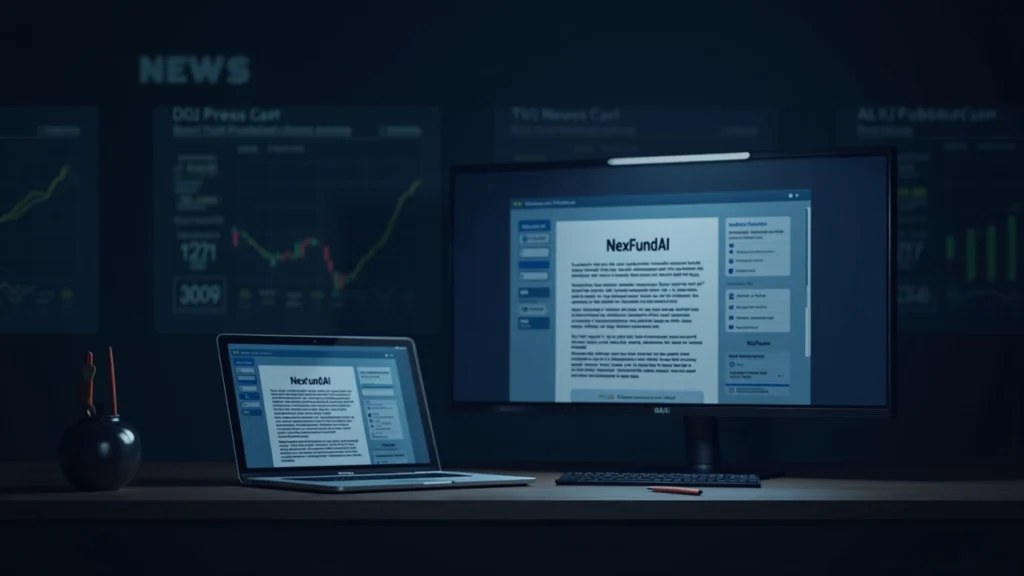
The operation, which the FBI ran under the name Operation Token Mirrors, revolved around a fictitious token called NexFundAI. Federal agents used the token to approach crypto financial-services firms and test whether they would provide services designed to create false signs of liquidity and demand.
According to the DOJ, that approach led investigators to executives and staff linked to four firms: Gotbit, Vortex, Antier and Contrarian. Prosecutors say those participants engaged in coordinated buy-and-sell activity meant to simulate genuine market interest and mislead investors about the strength of trading in the token.
The government charged the ten defendants with wire fraud and conspiracy to commit wire fraud. The allegations frame the conduct not as aggressive marketing or routine liquidity support, but as a deliberate scheme to distort price discovery and fabricate trading signals in the market.
The case shows how far U.S. crypto enforcement is now reaching
Authorities say the investigation has already produced arrests, extraditions and asset seizures. Several defendants were detained and extradited from Singapore in October 2025, more than $1 million in cryptocurrency has been seized, and some related cases had already produced guilty pleas or sentences earlier in 2025.
What makes this case especially significant is the method behind it. The coordinated role of the DOJ, FBI and IRS Criminal Investigation suggests that undercover tactics and cross-border cooperation are becoming more central to how U.S. authorities pursue crypto market-abuse cases.
That raises the bar for exchanges, traders and project teams alike. Independent liquidity checks, tighter onboarding standards for market makers and more caution around leveraged exposure are becoming increasingly important in a market where artificial trading activity can now trigger not only civil actions, but criminal charges.
Colin Harris
I'm Colin Harris, L1s Analyst and Web3 Reporter for the United States. My day-to-day involves diving into the fundamental layers of the ecosystem, specializing in Layer 1 (L1s) networks.
More from Colin Harris →This article is for information only and is not investment advice. We report under our Editorial Policy; to flag an error, see our Corrections Policy.