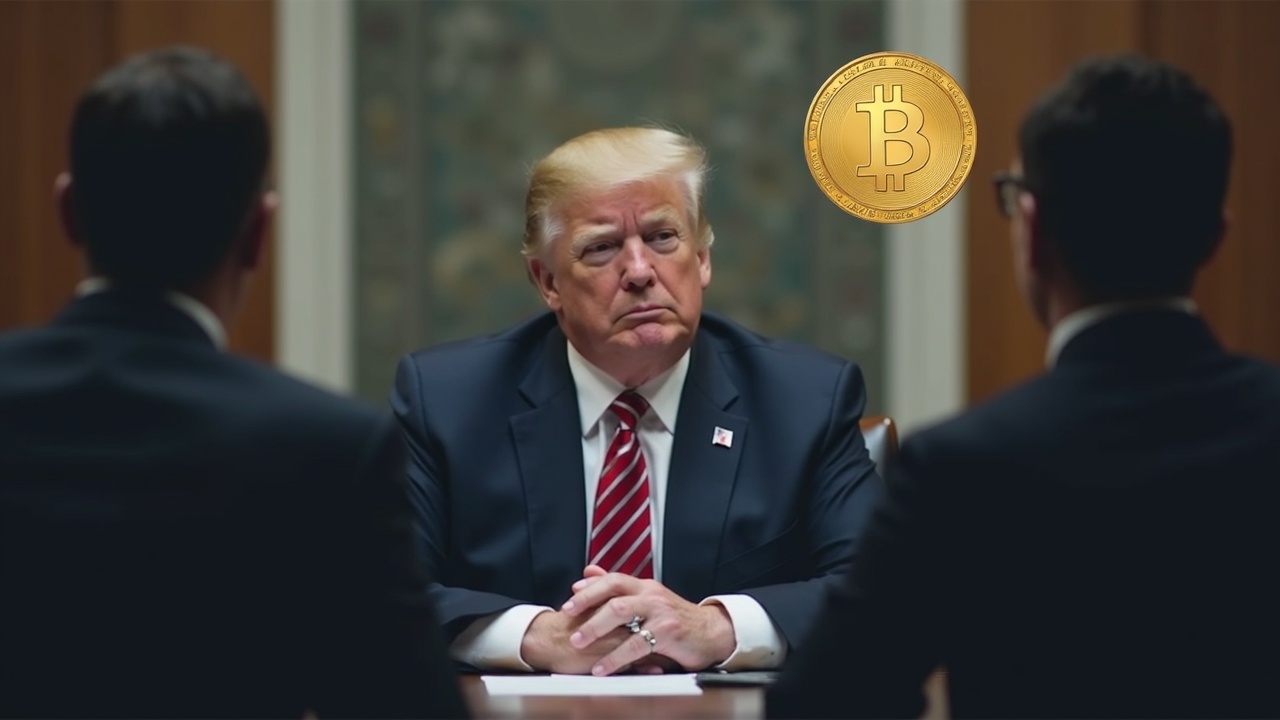


The Financial Times reported that Donald Trump’s so-called “Board of Peace” discussed a preliminary idea to create a U.S. dollar-pegged stablecoin aimed at supporting Gaza’s economic recovery. The concept was presented as a fast payments layer to help restore day-to-day commerce where cash and banking have been disrupted.
According to the FT, supporters argued a dollar-backed token could enable digital payments, streamline aid distribution, and serve as a substitute medium of exchange when physical cash supplies and bank services are impaired. Organizers reportedly stressed this would be a payments tool rather than a new currency and not a “Gaza Coin.”
What the proposal includes
The plan was led by Israeli entrepreneur Liran Tancman, described as an unpaid adviser and co-founder of the Gaza Humanitarian Foundation, and involved talks with Gulf Arab and Palestinian parties. The discussions were characterized as exploratory, with the stablecoin idea still framed as early-stage rather than a finalized program.
Backers tied roughly $7 billion in reconstruction pledges to the board, with another $5 billion said to be possibly under consideration, while Trump separately announced a $10 billion U.S. contribution with congressional appropriation described as unclear. The funding picture, as reported, blends pledged commitments with unresolved political and legislative gating items.
Tancman also outlined adjacent initiatives, including upgrading internet access from 2G to high-speed connectivity by July and building an Amazon-style logistics platform to improve imports and local commerce. These complementary projects were positioned as infrastructure enablers that would make digital payments and coordinated distribution more feasible.
Governance and risk questions
Critics cited by the FT raised concerns that without a clear, formal role for Palestinian authorities, the stablecoin could impose external financial control and complicate economic ties with the West Bank. The central objection in the coverage was governance legitimacy, with fears that a digital peg could be perceived as externally imposed rather than locally accountable.
Advocates emphasized blockchain-based tracking as a way to reduce aid diversion and illicit financing, while detractors warned the same transparency could enable granular financial surveillance and potential restrictions on access to funds. The debate therefore hinged on whether traceability would be experienced as protection and accountability or as control and monitoring.
The FT also described geopolitical friction around participation, including Japan delaying a decision on joining the board and Trump signaling distrust of some multilateral institutions, which could complicate international buy-in. Those signals matter because the stablecoin’s credibility would depend on who governs it and which institutions are willing to support it.
For market participants and crypto infrastructure providers, the proposal immediately raises operational questions about issuer design, reserve custody, embedded on-chain controls, and how jurisdictional oversight would be enforced. The project’s viability ultimately appears to depend on formal governance arrangements and credible inclusion of Palestinian stakeholders, not only on the technology choice.