
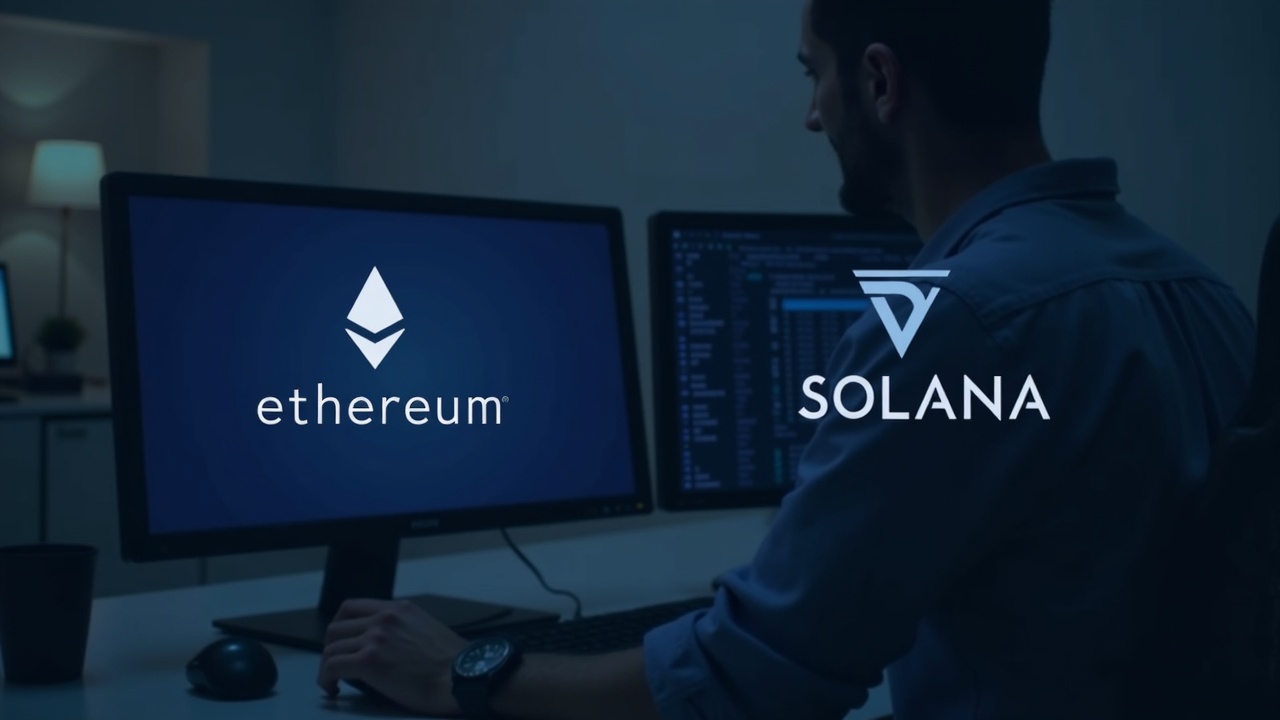
A useful way to understand the Ethereum vs. Solana debate is to treat “resilience” as the real divider. Ethereum tends to define resilience as survivability—staying censorship-resistant and operational under stress—while Solana tends to define it as performance—keeping throughput high and recovering quickly when something breaks. That philosophical split shows up everywhere: how each chain is built, how it upgrades, and where operators should expect failure risk to concentrate.
The practical implication is that systemic risk lives in different places. On Solana, the stress point is validator uptime and client diversity; on Ethereum, the stress point is base-layer security and finality while scaling is pushed to Layer-2.
Ethereum’s Version of Resilience: Survive First, Scale Second
Ethereum’s posture treats resilience as “keep the base layer reliable even in ugly conditions.” The design preference is redundancy and multi-client diversity so the chain doesn’t hinge on a single implementation or a narrow fault domain. That comes with trade-offs: the base layer is comparatively slow, processing roughly 15–30 transactions per second with block finality around 13–15 seconds, and fees can be higher because the base layer is optimized for secure settlement rather than mass throughput.
In this model, Layer-2 is where scale happens. The analysis points to early-2025 Proto-Danksharding (EIP-4844) as a key step because it cut L2 data costs and strengthened the modular scaling path. It also notes that validator exit queues have remained near zero, which the analysis treats as a confidence signal in the roadmap. The philosophy is clear: keep L1 strong and conservative, then let rollups carry volume.
“Ethereum was not created to make finance efficient or apps convenient. It was created to set people free”
This was an important – and controversial – line from the Trustless Manifesto ( https://t.co/1F1Fe9OQPh ), and it is worth revisiting it and better understanding what it…
— vitalik.eth (@VitalikButerin) January 5, 2026
Solana’s Version of Resilience: Keep Speed High, Fix Fast
Solana’s framing ties resilience to always-on, low-cost performance. Its monolithic approach—Proof of History, Tower BFT, and parallel execution—targets very high throughput and low latency, with the analysis citing theoretical capacity up to 65,000 TPS, finality around 400 milliseconds, and very low transaction fees. The intent is to make the base layer itself the throughput engine rather than pushing scale outward.
But that approach brings a different failure mode: operational fragility becomes more visible when the chain is tuned for speed. Seven major outages over five years, with five linked to client-side failures, which exposed a client monoculture risk. That’s why client diversity is the core mitigation effort. Jump Crypto’s Firedancer—a new C/C++ validator client—reached testnet, and its hybrid predecessor (Frankendancer) has been running on mainnet. Late-2024 stake distribution estimates: about 69% on the Solana Labs client and about 31% on Jito’s client. Firedancer’s purpose is to create a distinct fault domain so one client bug doesn’t become a network-wide event.
This is a pretty cool vision. There is no point to duplicate work. What I really care about is maximizing how fast and how much information we can synchronize without any essential trusted third parties. Reliability just happens to be an implementation detail. More… https://t.co/6vlzIZ23KG
— toly 🇺🇸 (@toly) January 6, 2026
What Operators Should Watch Next
For Solana, the real test is not theoretical TPS—it’s whether client diversity becomes reality at scale. Wider mainnet adoption of Firedancer and meaningful stake redistribution are the practical checkpoints for turning high performance into production-grade resilience. If the client monoculture breaks, Solana’s “fast and reliable” pitch becomes materially stronger; if it doesn’t, the outage history stays a live risk factor.
For Ethereum, the test is whether modular scaling keeps delivering without compromising the base layer. Continued L2 adoption, plus follow-on upgrades referenced in the analysis (Pectra and Fusaka), will determine how effectively Ethereum can preserve base-layer security while relieving congestion. In other words, Ethereum is betting that resilience comes from conservative settlement plus scalable layers; Solana is betting that resilience comes from a high-performance base layer plus improving client diversity.