
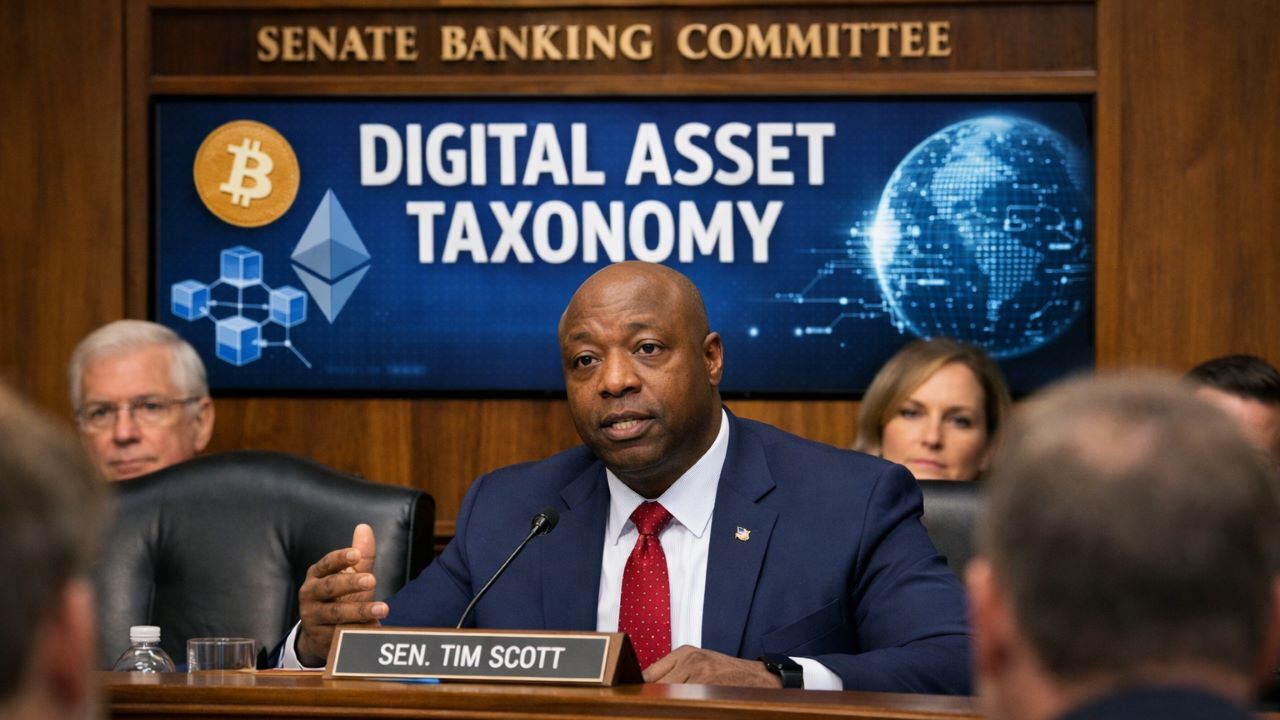
The Senate Banking Committee will mark up the Digital Asset Market Clarity Act (the CLARITY Act) on January 15, 2026, according to the committee schedule. The session, led by Chairman Senator Tim Scott, is meant to formalize a taxonomy that splits digital-asset oversight between the CFTC and the SEC.
The goal is to reduce a regulatory gray zone that the industry says has slowed investment and made product planning harder. Supporters view the markup as a chance to turn “unclear rules” into a workable baseline for listings, custody, and tokenization decisions.
What the CLARITY Act Tries to Define
The bill proposes a statutory framework that sorts tokens into distinct categories and assigns regulators accordingly. It places “digital commodities” under primary CFTC oversight while reserving “investment contract assets” for the SEC, and it also addresses stablecoin definitions inside the jurisdictional scheme.
Backers argue this structure would clarify how registration, disclosures, and enforcement should work in practice. Critics are expected to push amendments during the markup that challenge the boundaries of these categories and the scope of each agency’s authority.
What Could Change on January 15
The House has already advanced a companion measure, H.R.3633, with bipartisan support, which gives the Senate process momentum. January 15 is the committee venue where definitions and jurisdiction assignments can be revised and aligned with the House text.
This is not a rubber-stamp meeting. Committee members are expected to pressure-test how the bill handles hybrid tokens, custody models, and market-structure tools like derivatives and perpetuals—issues that directly affect exchanges and liquidity providers.
For market participants, the operational stakes are concrete. Clearer jurisdiction could reduce interpretive risk for exchanges and custodians; protocol teams could adjust token features and disclosures to fit the categories; asset managers and treasuries could accelerate tokenized RWA and stablecoin integrations if the framework holds; and enforcement playbooks would shift under more distinct SEC/CFTC roles.
The main signal investors and product owners will take from the markup is whether amendments narrow or broaden the draft’s classifications—and whether bipartisan traction is strong enough to keep the bill moving. What happens on January 15 will shape expectations for listings, custody arrangements, and institutional adoption in the months that follow.