
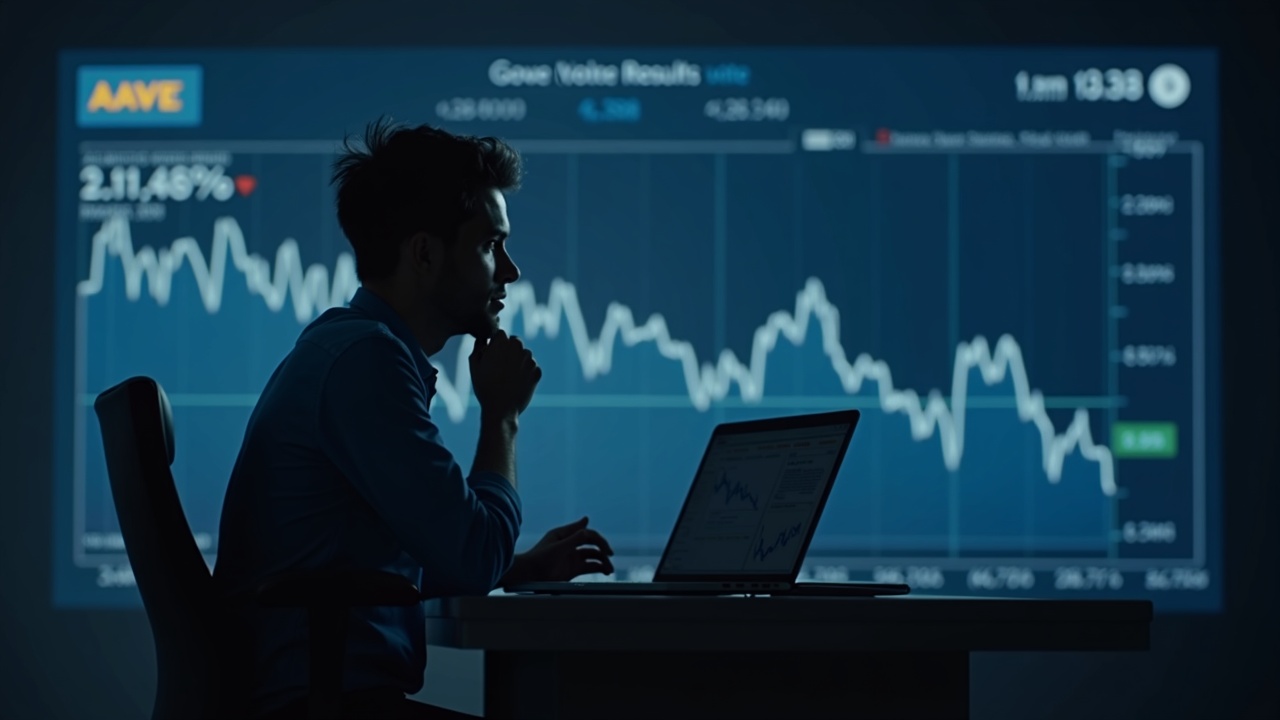
The Aave governance vote to transfer the protocol’s brand assets to the DAO was rejected, with the Snapshot poll showing 3.5% support, 55.29% against, and 41.21% abstaining. The result followed a week of public criticism of Aave Labs and crystallized a dispute over revenue flows, brand control, and governance process that unsettled investors and on-chain stakeholders.
Why the vote failed and what it signals for Aave governance
The proposal collapsed amid accusations that Aave Labs advanced the initiative without sufficient community alignment. Critics argued the process lacked adequate consensus-building and created the perception of an attempted governance escalation rather than a negotiated transition. Former Aave CTO Ernesto Boado said his name was used without consent, and Marc Zeller of the Aave Chan Initiative described the escalation as a “hostile takeover attempt,” according to Zeller. These allegations reinforced concerns about governance legitimacy and stakeholder representation in high-stakes votes. A core grievance was the claim that Aave Labs redirected roughly $10 million per year in frontend fee revenue from a CoW Swap integration to a Labs-controlled address rather than the DAO treasury, based on reporting circulated during the debate. The fee-routing allegation served as the central economic trigger that turned a brand-control vote into a broader fight over revenue rights and accountability.
Market participants reacted rapidly as uncertainty rose. Reports indicated AAVE declined between 7% and 18% in the week around the vote, including a single-day drawdown of roughly 10% to 11% as tensions peaked. Price weakness was reinforced by on-chain signals, including a major-holder sell-off of about 230,350 AAVE valued around $37.6 million to $38.0 million, which added measurable sell-side pressure. Trading firms and ecosystem participants signaled disapproval as well: Evgeny Gaevoy, founder and CEO of Wintermute, said his firm voted against the proposal and urged Aave Labs to resolve longer-term alignment issues, according to Gaevoy. The stated opposition from a major liquidity and trading participant underscored that the dispute was being priced as governance risk, not merely community noise. Pseudonymous Lido advisor Hasu described the token-equity structure tensions as “fundamentally broken,” according to Hasu. That characterization positioned the conflict as a structural governance-and-incentives problem rather than a one-off controversy.
Beyond the immediate disagreement over brand assets and fee allocation, the episode exposed a deeper identity conflict between DAO representation and core-team guidance. The events intensified scrutiny of token-weighted governance and its vulnerability to concentrated holdings or rapid unilateral moves by core teams. Media reporting also highlighted founder Stani Kulechov’s token purchases, described as ranging between $5.15 million and $12.6 million, which prompted questions around vote concentration and alignment. Those purchases added a layer of perception risk at a moment when governance outcomes were already being questioned for process integrity. For treasuries and product teams that rely on predictable governance and transparent revenue sharing, the episode translated into operational uncertainty. When governance disputes intersect with revenue claims and large-holder positioning, the risk is not only price volatility but also reduced confidence in forward-looking protocol decision-making.
The Snapshot rejection on December 26, 2025 underscored fractures between Aave Labs and the DAO and coincided with material price and flow effects for AAVE holders. The immediate implication is continued governance friction and sustained scrutiny of revenue distribution and process controls.