Tether Invests in Generative Bionics, Backing Italian Humanoid Robotics
Tether invests in Generative Bionics after a €70 million funding round, entering the industrial robotics space while leveraging its large-scale compute capacity.


Tether invests in Generative Bionics after a €70 million funding round, entering the industrial robotics space while leveraging its large-scale compute capacity. The investment links Tether’s 20,000‑GPU network to an Italian spin‑out focused on humanoid Physical AI, signaling a strategic shift toward embodied intelligence. The move is framed with potential industrial deployments as a near-term objective.
Deal and stakeholders
The round totaled €70 million (about $81.6 million) and was led by CDP Venture Capital’s AI fund, with participating investors that include AMD Ventures, Duferco, Eni Next and RoboIT alongside Tether. The capital targets product development and industrialisation of humanoid systems engineered and licensed from the Italian Institute of Technology.
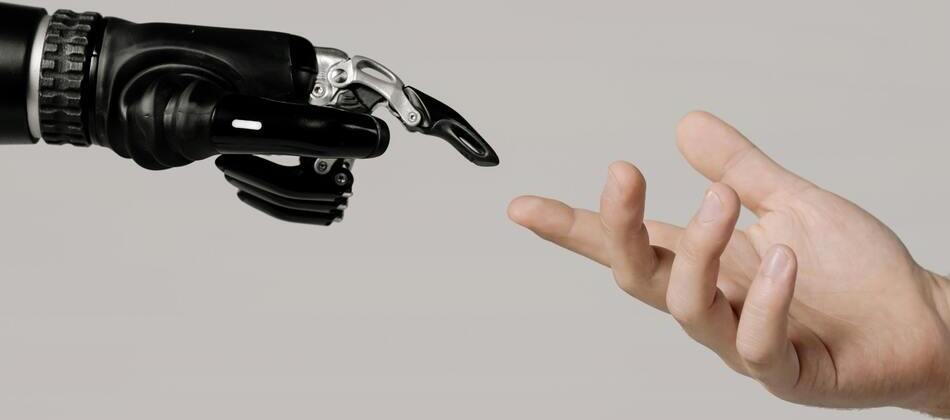
Technical assets, roadmap, and strategic rationale
Generative Bionics integrates roughly 70 engineers and AI scientists sourced from the Italian Institute of Technology, with a lineage spanning more than 60 advanced humanoid prototypes developed over two decades that represents a concentrated body of robotics IP. The technical stack emphasises advanced tactile sensing, learning architectures and human‑robot interaction components intended for industrial scaling.
Physical AI is defined here as AI systems embedded in physical agents that perceive and act in real environments. The company retains exclusive licences to core technologies from its academic origin and is positioning its platform for sectoral rollouts in manufacturing, logistics, healthcare and retail.
Tether frames the allocation as diversification into non‑crypto infrastructure and as an opportunity to vertically integrate compute, model training and hardware validation. The firm intends to apply its 20,000‑GPU global compute network to reduce AI training costs for embodied models and accelerate iterative validation cycles. Tether’s broader non‑crypto portfolio includes a $775 million commitment to a media platform and stakes in crypto credit and exchange platforms as well as brain‑computer interface ventures, supported by reported profits of $13.4 billion in 2024 and over $10 billion for Q1–Q3 2025. Paolo Ardoino, CEO of Tether, encapsulated the strategic view: “We invest in technologies that strengthen global digital and physical infrastructure and expand human potential”. Regulatory exposure remains a material constraint: Tether’s flagship stablecoin has encountered European market frictions tied to reserve‑location compliance under MiCA, a factor that increases execution and reputational risk as the company moves into regulated industrial channels.
The transaction binds a substantial compute resource to a concentrated robotics engineering team and reframes Tether as an investor in embodied AI systems rather than solely digital assets. The next verified milestone is the public unveiling of the company’s humanoid concept at a major trade event, followed by initial industrial deployments slated for early 2026, which will provide the first operational data points on cost, throughput and integration complexity. Next verified milestone: public reveal at CES and initial industrial deployments in early 2026.
Derek Vaughn
Hi! I'm Derek Vaughn, a Market Research Specialist based in Nigeria. I analyze crypto markets from a global perspective, trying to understand what's behind price movements and liquidity trends. I've been covering the digital ecosystem for several years, and my style is based on rigorous, data-driven research.
More from Derek Vaughn →This article is for information only and is not investment advice. We report under our Editorial Policy; to flag an error, see our Corrections Policy.